A collection of books tracing Elsa’s personal journey to becoming an artist.
Active Reading Club. Elsa Abdulkhakova’s Selection. Book collection
- Age restrictions
- 16+
T
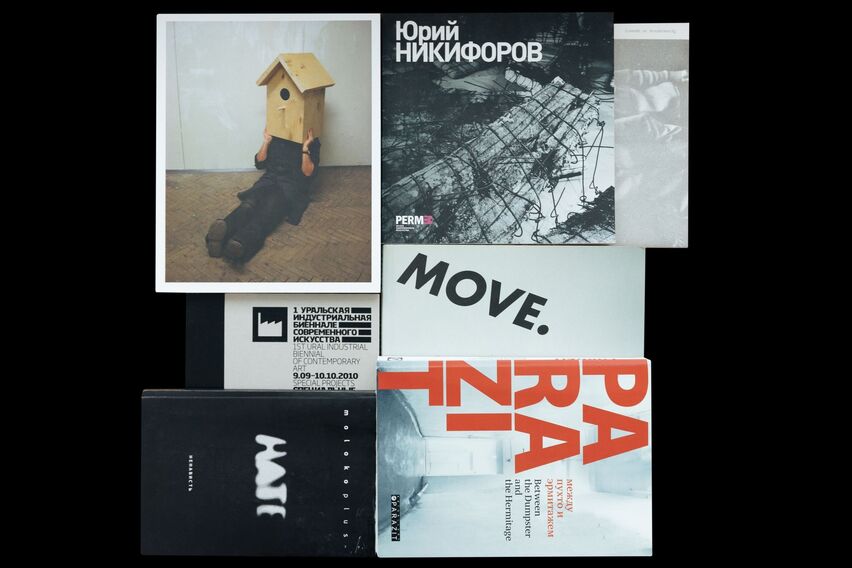
Photo: Daria Izbash
These publications are devoted to the artists and events that have had a profound influence on Elsa: her introductions to contemporary art and to contemporary dance; her first independent curatorial investigations and her first dance projects.
Elsa has contributed a note to accompany each publication in the collection.
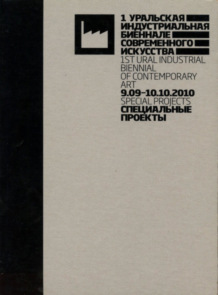
I was born beyond the Urals, in Kurgan, and this publication is a tribute both to my roots and to a project I followed with great enthusiasm.
I received a copy of this catalogue and a piece of merchandise—a mug depicting a can of condensed milk—from Yaroslava Bubnova at the opening of the 2nd Biennial, after correctly answering which participants in the 1st Ural Industrial Biennial had spent a week producing soap at a factory. The question was almost too easy for me, as I was already very familiar with the work of the PARAZIT collective. It was, of course, the Mylo—or "Soap"—group, consisting of Semyon Motolyanets and Dmitry Petukhov, and their performance Working Week at the Uralmash plant.
Ot tuposti k parazitizmu [From Stupidity to Parasitism].
Booklet accompanying the second exhibition in a series of archival exhibitions at the Invisible Border festival, KultProekt Gallery, 2012
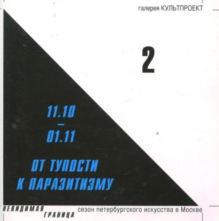
This booklet reminds me of my first visit to Moscow and my first publication in print. I was in the second year of the master’s programme at the Faculty of Liberal Arts and Sciences at St. Petersburg State University. I had already discovered contemporary art and had even chosen the subject of my dissertation: “The St. Petersburg ‘New Blockheads Brotherhood’ in the context of Russian art.”
At the time, I was beginning to gain practical experience, primarily through my involvement with the PARAZIT artists’ collective, which had emerged from the ‘New Blockheads Brotherhood,’ both genealogically and ideologically. The purpose of the exhibition was to establish and demonstrate the connection between the two groups.
Most importantly, however, Ot tuposti k parazitizmu became the first in a series of projects about the ‘New Blockheads Brotherhood’ initiated by the artist and curator Pyotr Bely. The series culminated in a retrospective exhibition at the Moscow Museum of Modern Art. Its catalogue is also available at
Yuri Nikiforov. Dry Land Swim.
Catalogue of the exhibition at PERMM, 2013
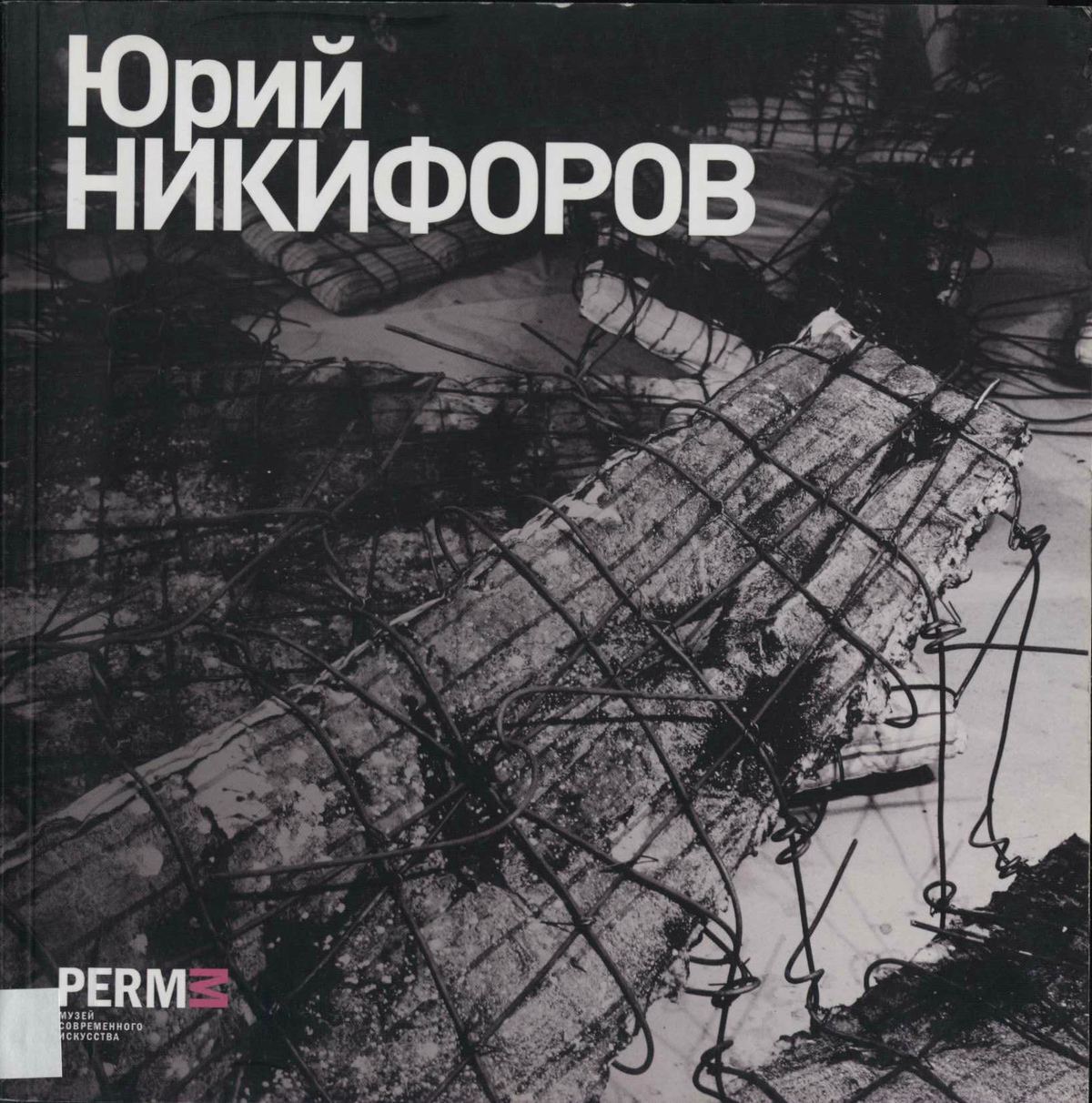
Dry Land Swim was Yuri Nikiforov’s first and, unfortunately, only major solo project. I remember as though it were yesterday how Yuri and I sat in his studio, going through his past projects and deciding what to include in the catalogue and exhibition, wrestling with texts, and discussing what critics had written.
Yuri Nikiforov’s works contain a great deal of expression, roughness, and sharpness, they seem very honest to me, and have lost none of their relevance over time.
Should you find yourself in St. Petersburg near the Pushkinskaya-10 Art Centre, make the effort to visit the Colonel’s Studio, Nikiforov’s creative laboratory, which has since become a museum.
Vladislav Shapovalov. Diplomatiya Obraza [Diplomacy of the Image].
Catalogue of the exhibition at MMOMA, 2017
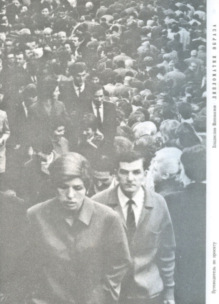
I admired Vladislav’s clarity and organisational skills while we were working together on the Diplomacy of the Image project. One thing he said has remained particularly vivid in my memory: “Emancipate the artistic within yourself.”
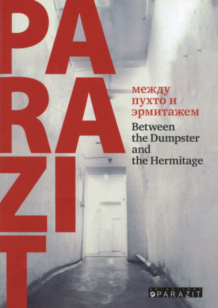
This catalogue was an act of overcoming. Publishing it was a genuine ordeal: work on the publication went on for almost seven years. One section of the catalogue is an exhibition chronicle of the PARAZIT collective from 2000 to 2015, which I compiled.
In one of my texts about PARAZIT, I wrote: “this is a story about communication and a friendly atmosphere, a story about a school for young artists.” After several years of working together and a long pause following an emotional “break-up,” it now seems to me that the work of the PARAZIT collective is about energy and constant attempts—without which there would be neither mistakes nor successes.
Vladimir Kozin. Pochuvstvuy sebya ptitsey [Vladimir Kozin. I Feel Like a Bird].
Edited and compiled by Alexander Dashevsky and Anastasia Kotyleva, 2023
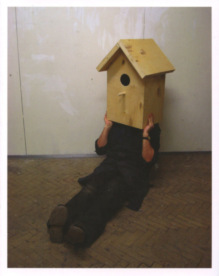
This publication is almost a printed retrospective—or, perhaps, a catalogue raisonné—of Vladimir Kozin, who was once a member of the ‘New Blockheads Brotherhood’ and remains a member of the PARAZIT collective. Alongside this, Vladimir Kozin has developed a successful individual artistic practice, working extensively with rubber, wood, photography, and collage.
Vladimir is fatherly, kind, and generous. Despite being busy, he never refuses a conversation with anyone who is interested in his work. I spent more than one “archival Wednesday,” as we called them, in his studio. I sorted through the New Blockheads archive and took it home with me, so that I could organise it and eventually return it.
I still treasure those many hours of conversations over tea, preserved somewhere as audio recordings. They taught me an enormous amount.
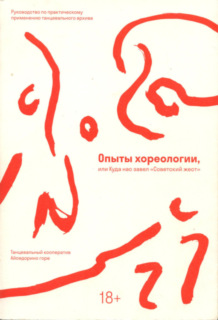
Perhaps this guide is a reminder of a time when I still found rejection from projects extremely difficult to cope with. Following yet another “no,” and the understandable emotions it produced, I received confirmation that I had been accepted into Experiments in Choreology, a creative laboratory run by the Isadorino Gore dance cooperative. I was immensely happy—and terribly nervous.
I believe that participating in Experiments in Choreology showed me what artistic research could be and how an archive could be connected to dance. I began to notice how hard it is to trust your own body. Over the course of the laboratory, I unexpectedly discovered improvisation as a source of strength, and it became the part of the dance practice I looked forward to most.
Quite apart from my participation in one section of The Soviet Gesture, I consider the project to have been exceptionally well executed and timely—if not outright brilliant—and I cannot wait for its next instalment. For some reason, I have a feeling there will be another one.
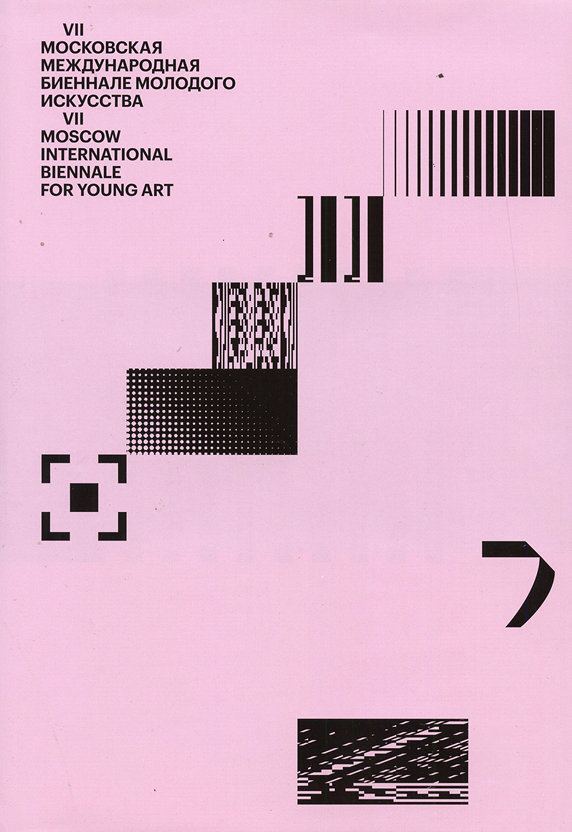
The story of my participation in the 7th Moscow International Biennale for Young Art could have been titled either “Beginner’s Luck” or “There Are No Coincidences.”
Less than a year had passed since I had discovered my ability to dance when I was fortunate enough to curate one section of the international forbidden body language project. The project comprised six dance works, one of which was my own, performed in a duet.
It was a twelve-day fairy tale. The opening had barely finished and only two of the nine performances had taken place when COVID forced us to move the project online. Nevertheless, it was an extraordinary experience of teamwork in a different context. At the time, I was juggling three jobs and once had to call an ambulance for myself during a rehearsal. Ultimately, however, the project earned me a nomination for the Innovation Prize as Curator of the Year.
Move: Choreographing You. Art and Dance Since the 1960s.
Publication accompanying the exhibition at London’s Hayward Gallery, 2011
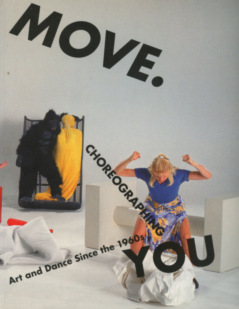
I received this publication as a gift from my colleague and friend Vik Lashchenov, who described it as “a book about dance featuring nearly all of our favourites.”
For a long time, I took great pleasure in looking through and reading it. From time to time, I used ideas from the book during rehearsals—the duet with a folding chair, for example, in which the chair becomes a frame for the body.
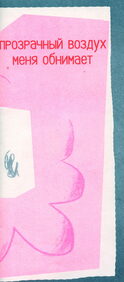
I included the zine The Clear Air Embraces Me partly out of gratitude to German Stroganov for helping me discover my ability to dance, and partly because it represents a medium that I dearly love: performance scores that, though extremely simple, allow performers to exhibit their own uniqueness and beauty.
Masha Somik’s graphic work is a particular passion of mine. I own one of her abstract portraits, and recently acquired a T-shirt featuring one of her drawings. I also treasure my participation in Masha Somik and Sasha Vinogradova’s collaborative concert-performance I Hear You, as it was my first experience of working with performance art.