The
T
The Library’s Collections are regularly updated. Collections freely available in the Library’s reading room are presented in the Now section. To access books from collections that have moved to the Past section, you need to obtain a library card and order the necessary publications through your personal account in the Library’s electronic catalog.
Collections are formed with the participation of
As a result, unexpected and unique connections are established between very different books. According to the “law of good neighborliness” introduced by art historian Aby Warburg, books should be classified not only and not so much by bibliographic features. Their systematisation should be based on content—so that each subsequent book comments on, complements, or critiques the previous one.
Accessibility
One of the main objectives of
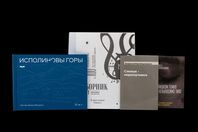
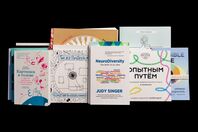
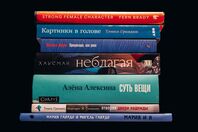
In this collection, one can find both fundamental research that has become the theoretical foundation for the concept of neurodiversity, as well as limited-edition publications, comics, and exhibition catalogues. All books are united by an interest in the lives of neurodivergent people and their experiences of interacting with an ever-changing world.
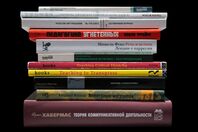
Mediation is a practice of interaction between a cultural institution and its visitors, aimed at establishing respectful dialogue among all participants in the process. The collection in the Library emerged as a reflection on the theoretical and practical foundations of mediation. The collection was assembled by
Active Reading Club
The Active Reading Club is a series of sessions in which participants approach reading as a game, a form of movement, and a way of exploring the spaces of
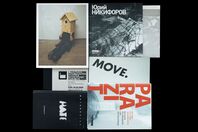
The first two cycles of the Active Reading Club programme, held in the spring and winter of 2023, were led by Elsa Abdulkhakova, an artist with a background in art history and curating. Abdulkhakova’s projects bring together personal and collective experience. For
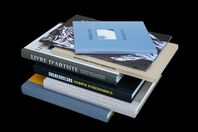
Publications from the Library’s collection tell the story of the history and theory of artist’s books as an art form: from experiments by nineteenth-century painters to contemporary limited-edition zines. The collection is complemented by works of modern creators in this genre.
Time-Based Media
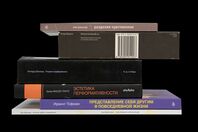
Performance is often seen as simply a spectacular form of contemporary art, in which the artistic gesture is an action somehow “choreographed” by the artist. The texts presented in this book collection address the various meanings of the term, revealing the collective and social character of the phenomenon.
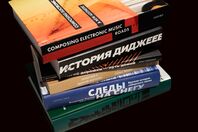
The music book collection reflects the array of approaches to be found in philosophical reflections by classical and contemporary thinkers, first-person accounts by iconic artists, historical genre analysis, and industry research. This collection is part of the Library’s regularly updated thematic selections, which focus on time-based art forms.
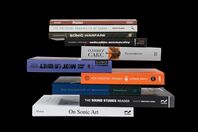
This book collection brings together inquiries into a familiar physical phenomenon—the phenomenon of sound—from philosophical, anthropological, and biological perspectives.
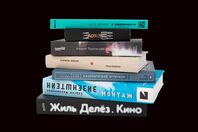
This is a collection of key works on cinematography, from classical treatises to contemporary studies. It includes theory, criticism, biographies, and even works of fiction dedicated to the screen arts. The collection was formed gradually as part of
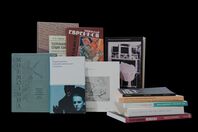
This book collection explores the history of theatre, examines theoretical works, and introduces contemporary drama. The selection complements the theatrical direction developing at
Exhibitions
The
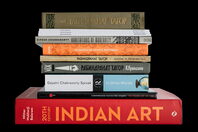
This book collection devoted to Rabindranath Tagore offers a detailed intellectual and artistic map, charting biographies of Tagore, scholarly editions of Tagore’s collected works, and studies in postcolonial theory and contemporary Indian art. The collection attempts to view Tagore not as an isolated figure, but as a personality of profound importance within cultural, philosophical, and artistic contexts.
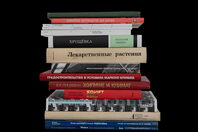
This collection traces the history of how fashionable photo albums about “cosmic communism” gave way to in-depth studies of post-war Soviet architecture’s global legacy. This subject is currently eliciting a surge of scholarly interest, and is of the Moscow — Hanoi: Landscapes of Optimism exhibition project.
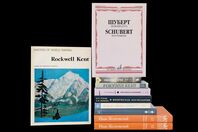
This book collection complements the Eternity Formulae exhibition, engaging with its scholarly and artistic context. It allows for a deeper understanding of the symbols that appear in the exhibition—from episodes in Soviet architectural history to European painting and the achievements of astrophysics.
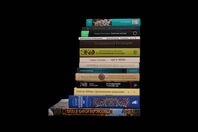
Put together to accompany the Undark Ages: Tales of Medievalism and Academia exhibition, the Ever-Bright Ages book collection brings together works that draw connections between perceptions of the Middle Ages and Antiquity, the history of art, and the present day.
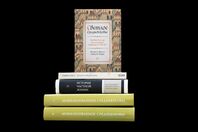
The Middle Ages do not remain in the past—they return to us in images, narratives, and myths that are reproduced again and again. Compiled by the medievalist Polina Pilyugina to coincide with the Undark Ages: Tales of Medievalism and Academia exhibition at
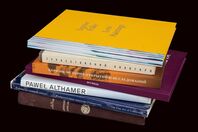
This book collection follows the curatorial approach of the Split Together, Merged Apart exhibition project, which brings together archaeological finds, historical documents, and twentieth-century works of art. It explores how the idea of building the future is intertwined with the rethinking and “reinterpretation” of geography, nature, history, and the fates of individuals.
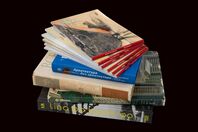
The books included in this collection do not just complement the exhibition If These Walls Were Water. Lina Bo Bardi—they will be of interest to anyone curious about Latin American architecture and interdisciplinarity in contemporary cultural projects.
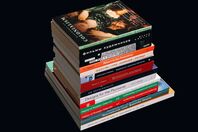
The Videobrasil. Needs No Translation exhibition examines the development of technology and media through the lens of art from Global South countries, emphasising the self-sufficiency of visual language that has evolved over decades in the practices of artists from Asia, Africa, and Latin America. By focusing on video art techniques, transformations in cinema, and the context of Russian video art, this collection offers visitors a deeper understanding of the exhibition’s meaning-making aspects and broadens perspectives on Latin American culture.
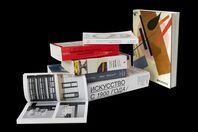
n extensive book collection featuring works on the theory and history of Russian and Western art from the twentieth and twenty-first centuries. These research materials and art historical essays complement the exhibition Square and Space: From Malevich to
Personal collections
The private book collections donated to the Library represent unique portraits of their owners. These compilations reveal individual interests, passions, professional connections, and personal relationships of those who assembled them.
This exceptional collection of rare research materials, theoretical works on contemporary art, and exhibition catalogues from the personal library of curator and cultural sociologist Joseph Backstein. All publications were donated to the Library by Backstein’s widow—the British art critic Kathy Deepwell.