Baroque as avant-garde in the cycle of violin sonatas by Heinrich Ignaz Franz von Biber.
The Rosary Sonatas
- Date:
- 22 Oct 2026,
19:00–22:00
- Age restrictions
- 6+
Programme
T
Heinrich Ignaz Franz von Biber (1644–1704)
The Rosary Sonatas
for violin and basso continuo
I. The Annunciation
II. The Visitation
III. The Birth of Christ
IV. The Presentation in the Temple
V. Jesus in the Temple
VI. Christ at the Mount of Olives
VII. The Scourging of Christ
VIII. The Crowning with Thorns
IX. The Carrying of the Cross
X. The Crucifixion
XI. The Resurrection
XII. The Ascension
XIII. The Descent of the Holy Spirit
XIV. The Ascent of the Virgin Mary
XV. The Coronation of the Virgin Mary in Heaven
XVI. The Guardian Angel
The Austrian composer Heinrich Ignaz Franz von Biber (1644–1704) was a man ahead of his time: a virtuoso violinist who pushed the expressive potential of his instrument to the limit and at the same time a mystical artist who regarded music as a form of spiritual practice. The avant-garde freedom of his melody, fierce dissonances and sonic special effects have inspired keen interest in Biber’s work in recent decades, making the Austrian composer’s name synonymous with radical artistic exploration.
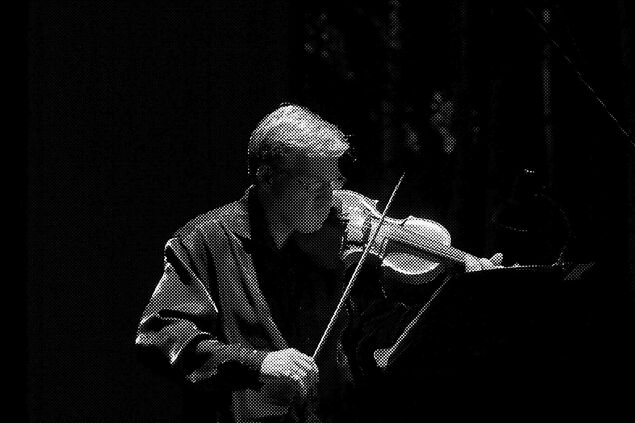
Performed by
Soloists of the Pratum Integrum orchestra
Sergei Filchenko artistic director
Yaroslav Timofeev concert host
The Rosenkranzsonaten (“Rosary Sonatas”), a cycle of short sonatas for violin with accompaniment, were completed no later than 1676. They represent the pinnacle of Biber’s art and one of the most important works of Baroque music. The sonatas use the technique of scordatura—the retuning of stringed instruments—which broadens the range of notes that can be played and creates a distinctive sonic character. Standard tuning of the four strings on the violin is used only in the first and last pieces of the set. Performance of the other sonatas requires retuning of the violin and accompanying instruments. For this reason and also because of the scale and virtuosity of the work, the Rosary Sonatas are rarely heard on concert stages. They were performed at
The main title of the work evokes the traditional Catholic rosary: a cord with 150 prayer beads referring to the 150 psalms of the Book of Psalms, divided into 15 decades, each corresponding to one of the "mysteries“—events from the lives of Jesus Christ and the Virgin Mary. The cycle has three sections (“Joyful Mysteries”, “Sorrowful Mysteries”, and “Glorious Mysteries”), each containing five sonatas. In the manuscript each sonata is preceded by an engraving depicting one of the fifteen mysteries. The cycle culminates in a passacaglia for solo violin, consisting of mournful yet solemn variations on a bass theme and illustrated in the manuscript by the image of a guardian angel with a child.
Pratum Integrum is an early music orchestra that performs on period instruments. Its Latin name means "unmown meadow"—a metaphor referring to the large body of undeservedly neglected works from the seventeenth-to-nineteenth centuries, which the orchestra brings to modern audiences. Pratum Integrum, created in 2003, has given the first-ever Russian performances of over two hundred compositions in a variety of genres, from sonatas and concertos to operas and cantatas. Initiatives have included a performance, together with a horn orchestra, of the melodrama Orpheus and Eurydice, which was composed in 1792 by the Russian composer Yevstigney Fomin. Pratum Integrum has also given Moscow premieres of Georg Gebel’s St John Passion (2009) and Bach’s St Mark Passion in a version by Jörn Boysen (2018), as well as Antonio Salieri’s Harpsichord Concerto in C Major (2019) and John Blow’s Venus and Adonis (2019). The orchestra has performed under the baton of renowned masters of historically informed performance, including Trevor Pinnock and Peter Neumann, Stefano Montanari and Reinhard Goebel, Robert Hollingworth, and Václav Luks. The orchestra has featured on many occasions in the December Evenings at the Pushkin Museum of Fine Arts in Moscow, taken part in major international festivals, including the Regensburg Tage Alter Musik and Musica Antiqua in Bruges, and performed in Magdeburg, Saint Petersburg, Gdańsk, Amsterdam, and Utrecht. Pratum Integrum won the prestigious German music critics’ award, Der Preis der deutschen Schallplattenkritik, in 2011.
Yaroslav Timofeev (b. 1988, Novgorod) is a musicologist, lecturer, and regular host of concerts at
You can buy a ticket to this concert in advance at a discount.
27 Aug — 10 Sep: 1700 rubles
11–27 Sep: 2000 rubles
28 Sep — 6 Oct: 2300 rubles
7–22 Oct: 2600 rubles
The cost of a discounted ticket is always 1000 rubles.