The House of Culture’s third film festival searches for manifestations of community and co-creation in new auteur films and archival classics.
Collective Cinema Festival. Introduction
- Age:
- Type:
- Age restrictions
- 18+
T
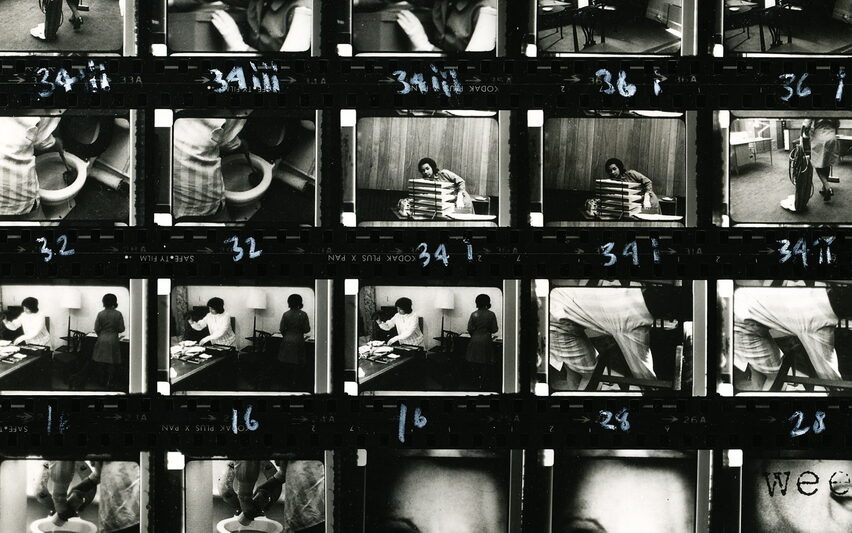
Still from Nightcleaners, 1975
This year’s focus is on one of the fundamental paradoxes that make up the magic of cinema. Being by its very nature a collective art—impossible without the close collaboration of people from different creative and production departments—cinema has nonetheless always aspired towards the expression of an auteur’s voice, a coherent and distinctive vision of a film’s formal structure and content. This paradox provoked the emergence of one of the most influential and enduring theories of cinema: auteur theory. It proclaimed the director as the sole creator of a film—and thereby contributed greatly to cinema’s recognition as an art form. But it also laid bare and compounded an unresolvable conflict at the heart of the film-making machine: the question of authorship (and with it the hierarchical nature of power, issues of control and exploitation) is bound to resurface time and again, while the status of the director as demigod is destined to be contested.
Yet the coherence of a film’s on-screen world can also be achieved through the polyphony of auteur voices and ambitions, assuming unexpected and often unique forms in the process. After all, even the very first films were born through the co-creation of the brothers Auguste and Louis Lumière. Throughout cinema’s history, its traditional hierarchy has known striking exceptions—from one-off projects bringing together two or more directors, each with their own signature style, to multi-person and often long-standing partnerships that challenged established filmmaking practices.
Dedicated to such exceptions and their striking results, the Collective Cinema Festival—like
The contemporary programme comprises Russian premieres of brand-new festival films. Alongside works by notable directorial partnerships and collectives, it will feature films that draw their subject matter—and even the specific qualities of their cinematic language—from themes of collectivity and community. For cinema, perhaps precisely because of its collaborative nature, can be a particularly vivid and expressive medium for talking about the coexistence of different people, and, in its most powerful manifestations, can foster that very coexistence. After all, when the lights go down in the auditorium and flicker into life on screen, the collective of authors behind any film is always joined by one more: the audience.