A scenic, prophetic manifesto film by one of the major visionaries of twentieth century cinema. Special screening in the programme The Rebellion of Dreams. Directed by Glauber Rocha.
The Age of the Earth
- Date:
- 10 May 2026,
15:00–18:45
- Age restrictions
- 18+
Registration opens two weeks before the screening.
T
Brazil, 1980—and at the same time Brazil at the dawn of time. The first human society emerges from primordial instincts, from the interweaving of bodies inflamed by the ecstasy of creation. Then, with a single abrupt cut, post-industrial society reveals the same prehistoric corporeality, now transformed into ritual and carnival. The spectacle’s vivid colours, however, cannot conceal the metastases coursing through the body of the vast country: the legacies of colonialism and capitalism. Revolution is inevitable—and its heralds are four resurrected Christs of the Third World, as if dispatched from an archaic epoch to come to the aid of the present.
A Idade da Terra
1980, Glauber Rocha
Brazil
140 minutes, Portuguese with Russian subtitles
Starring: Maurício do Valle, Jece Valadão, Antônio Pitanga, Tarcísio Meira
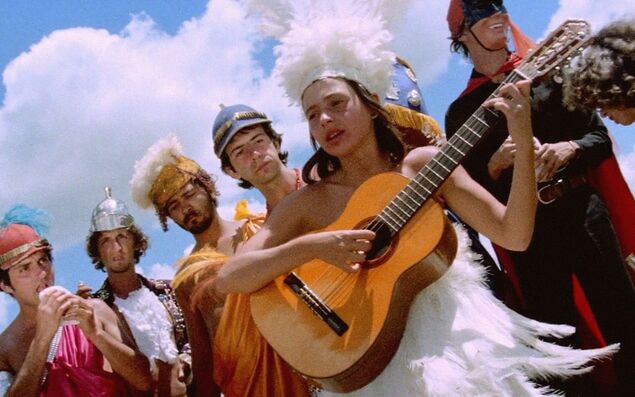
Shot from The Age of the Earth, 1980
All of Glauber Rocha’s films provoke rebellion in the viewer, awakening the desire to merge with the flow of life—full of change, fury, love, and irrationality.
— Carlos Valladares, Gagosian Quarterly
“Every scene here is a lesson in what modern cinema should be,” Michelangelo Antonioni said of The Age of the Earth. His enthusiasm was shared by Alberto Moravia, a classic writer of Italian literary modernism. Almost everyone else, however, was shocked by Glauber Rocha’s final film when it appeared in 1980. The director looked too boldly into the future, too fiercely rejected cinema’s subordination to literature, too brazenly opposed convention and comfort with a raw, cosmogenic revolt—a rethinking of life on a planetary scale. Rocha insisted that the film’s sixteen episodes could be watched in any order, and nearly half a century later both this claim and the film itself seem prophetic, anticipating the endless stream of fragmented images in which contemporary life now unfolds.