Joseph Haydn’s music for Good Friday performed by Saint Petersburg’s finest instrumentalists.
The Seven Last Words of Christ
- Date:
- 14 Apr 2026,
20:00–21:30
- Age restrictions
- 12+
Programme
T
Joseph Haydn (1732–1809)
The Seven Last Words of Christ, Op. 51 (1787)
Introduction
Sonata I “Father, forgive them, for they know not what they do.”
Sonata II “Today shalt thou be with me in paradise.”
Sonata III “Woman, behold thy son.”
Sonata IV “My God, my God, why hast thou forsaken me?”
Sonata V “I thirst.”
Sonata VI “It is finished.”
Sonata VII “Father, into thy hands I commend my spirit.”
Earthquake
In 1786, Joseph Haydn, who had by then achieved fame throughout Europe, received an unexpected commission: Don José Marcos Sáenz de Santa María, a Jesuit priest and the administrator of the Oratorio de la Santa Cueva chapel in Cadiz (Spain), asked the composer to write an instrumental score without words for the service on Good Friday. Haydn accepted the commission.
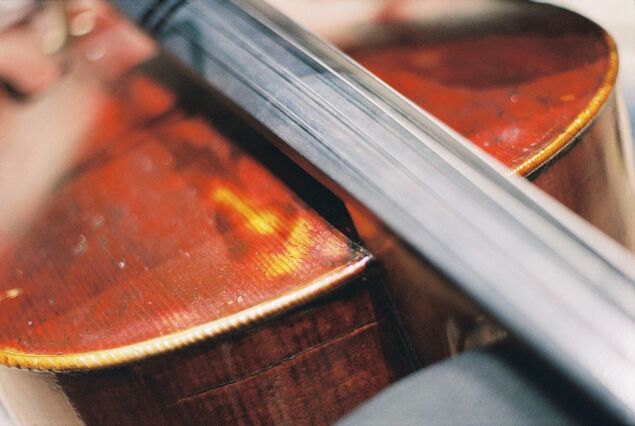
Performed by
Speech Quartet
Vladislav Pesin, violin
Sara Zeneli, violin
Lyubov Lazareva, viola
Evgeny Rumyantsev, cello
Yaroslav Timofeev concert host
Photo: Anya Todich
Years later the composer wrote an account of how the work was first performed: “The walls, windows, and pillars of the church were hung with black cloth, and only one lamp, hanging from the centre of the roof, broke the solemn obscurity. At midday, the doors were closed and the ceremony began. After a short service the bishop ascended the pulpit, pronounced the first of the seven words (or sentences) and delivered a discourse thereon. This ended, he left the pulpit and fell to his knees before the altar. The pause was filled by the music. The bishop then in like manner pronounced the second word, then the third, and so on, the orchestra falling in at the conclusion of each discourse.”
The orchestral piece is one of Haydn’s most unusual works, breaking with all the canons of Viennese classical music. Its seven meditative sections correspond to the seven phrases pronounced by Christ on the cross, as reported in the Gospels. They are preceded by a slow introduction and concluded by a single episode in fast tempo—the “earthquake” that Matthew’s Gospel describes as occurring at the moment of Christ’s death.
The Seven Last Words quickly won acclaim throughout Europe. In 1787, at the request of his publisher, Haydn first authorised a transcription of the work for solo piano, then created his own version for string quartet. In 1796, the Austrian diplomat, patron and composer, Gottfried van Swieten, created an oratorio version of The Seven Last Words of Christ for soloists, choir and orchestra, based on German sacred texts.
As a programmatic composition unique for its time, the work has kept its place in the repertoire, particularly in the version for string quartet. As Haydn himself wrote in a letter, “The text is expressed solely by the instrumental music in such a way that it creates the deepest impression in the soul of even the most unversed.”
Speech Quartet was founded in 2021 by violinist Vladislav Pesin, who brought together the best chamber musicians in Saint Petersburg. The ensemble specialises in performing and promoting the most recent music for string quartet, with a repertoire that includes works by leading Russian and foreign composers of the twentieth and twenty-first centuries. Interpretations by Speech of quartets from the classical and romantic eras stand out as novel and surprising. The quartet makes regular appearances in concerts at
Yaroslav Timofeev (b. 1988, Novgorod) is a musicologist, lecturer, and regular concert host at