T
/
En

How to Work with Disagreement. Mediators on the Rules
of Constructive Dialogue
Participants from the Radical Stability project discuss how best to make use of the difficult points in a conversation and use them to provoke engaging discussion.
Author:
Ira Popovich — media specialist at
Paola Mendoza (Paris) — artist, member of the art collective PuntaSeca.
Thiago Gil Virava (São Paulo) — postdoctoral researcher at the University of Campinas Institute of Arts, Brazil.
Federica Pascotto (Milan) — educational consultant, member of ICOM Italy’s working group on accessibility (2023–2027).
Anastasia Vazikova (Cheboksary) — mediator at the 2nd Chuvashia Biennale of Contemporary Art.
Sonya Legavina (Moscow) — mediator and cultural researcher. She works at the Garage Museum of Contemporary Art and on various independent projects.
Maria Galochkina (Moscow) is a senior mediator in the accessibility and adaptation department at the
Alisa Teryokhina (Perm) — independent art mediator and interdisciplinary urban space researcher.
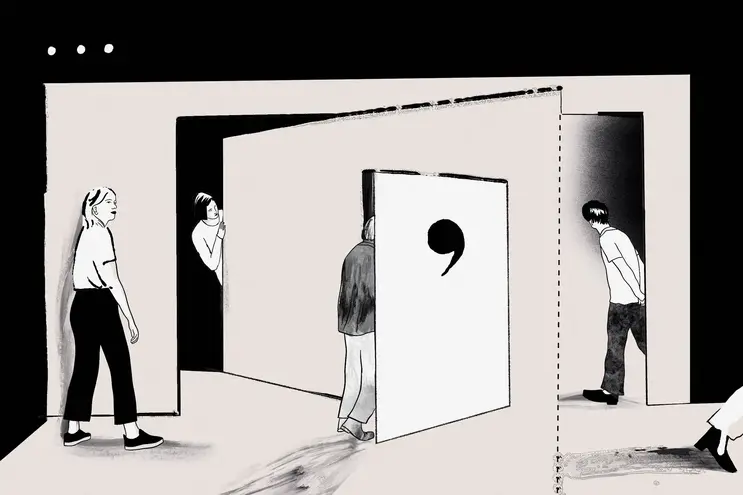
How to handle conversations with differing viewpoints?
Radical Stability — the second such forum held for Russian and international specialists working on mediation in the cultural sector, convening from April 10 to 12 at the
[Paola Mendoza] When conversations become difficult because of differing viewpoints, it can help to remember that disagreement is not necessarily an attack. In Le conflit n’est pas une agression, Sarah Schulman explains that conflict is a normal part of relationships, but we often react defensively because we perceive it as aggression.
At the same time, in Apprendre à transgresser, Bell Hooks describes dialogue across differences as an important part of learning and practicing freedom. My advice would be to approach these conversations with curiosity rather than defensiveness, and to see disagreement as an opportunity to better understand different experiences and perspectives.
Mediation is a means of studying contemporary culture through the building of respectful dialogue, regardless of the experience, views, or age of participants. The mediator is a specialist who analyzes cultural phenomena and devises methods for interpreting visual codes. Mediation projects at the House of Culture often cross disciplinary boundaries to enter the realms of experimentation and research.
[Thiago Gil Virava] Active and attentive listening is essential to avoid projecting your own beliefs and viewpoints regarding certain topics onto what the other person is saying. One technique that can help in this regard is, when faced with a difficult or problematic statement, to repeat what was said in your own words, confirm whether that was indeed the meaning of the message, and then respond accordingly. If there has been any confusion or misunderstanding, ask for clarification. Furthermore, it is important to remember that disagreement is not necessarily a problem. Insulting, demoralizing, and denying the humanity of those who think differently, however, certainly are.
[Federica Pascotto] Sometimes differing viewpoints do render conversations very hard. My advice is — especially if we are thinking about conversations in the workplace or along professional practice — never to see it as a personal issue. One can take his/her own stance and stand by it while also being very respectful of the other person’s point of view.
[Anastasia Vazikova] In situations like these, I like to adopt a curious mindset — as if I’m reading a new book. You can express this curiosity through clarifying questions, in so far as people tend to attach different meanings and nuances to the same words. If the conversation is heading in the wrong direction, the recommendation given by a colleague of mine has proven very helpful: imagine you’re in a glass dome, and everything the other person is saying is simply deflected away from you. It’s important to remember that it’s not always vital to reach a common denominator in a conversation, or to end up drawing the “correct” conclusions.
[Sonya Legavina] Just take a breath and remember that we’re all different. Mediation encourages dialogue, but dialogue doesn’t necessarily have to yield any specific outcome. The main thing is to express yourself and give a hearing to the other person, not to try to prove something.
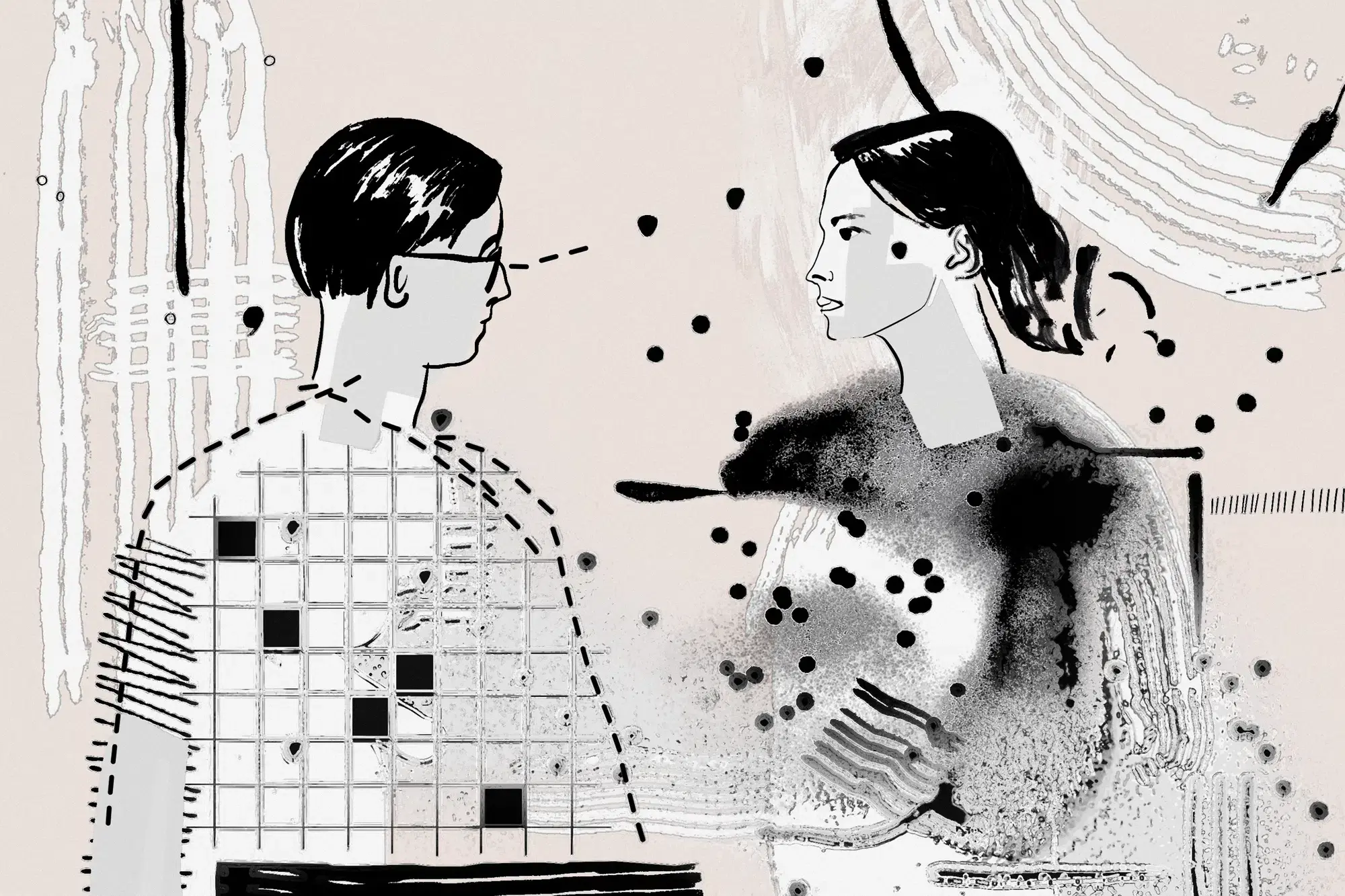
How have you applied this approach personally?
[Paola Mendoza] A recent example comes from January 2026, when I shared a room with someone for 36 days. During the first two weeks, we disagreed about almost everything. In many social conversations we were not on the same page, and it became quite exhausting. At first, every discussion felt tense, and this was in my own home, a space that I usually consider safe, intimate, and protective. I tried to change my attitude: instead of reacting defensively, I became more curious about why he thought the way he did. Even though we still disagreed on many things, the conversations became more respectful. The disagreement did not destroy the relationship; instead, it became an opportunity to understand each other better.
[Thiago Gil Virava] During a mediation in the 35th São Paulo Biennial, it was not uncommon for mediators to have to deal with visitors who were bothered by the large number of Black artists in the exhibition and repeatedly expressed this discomfort. Usually, they suggested the curators had acted in a prejudiced manner by giving preference to Black artists. A good way to counter that potentially racist remark would be to ask them if they had felt the same discomfort in previous editions, when the majority of the artists were white. It probably didn’t change those people’s minds, but it did bring to light the prejudice underlying their discomfort.
[Anastasia Vazikova] The 2nd Chuvashia Biennale of Contemporary Art featured the installation “Feast” by the artist Nastya Zhegal, whose practice gives prominence to artisanal bread as an artistic medium. Given the unique nature of this approach, it can be difficult for a mediator to anticipate audience reactions. When an audience encounters something for the first time, arguments are inevitable. It’s therefore vital to create a safe environment for expression and to ascertain what it is that lies behind each reaction.
Many shared stories with me about their families and the role bread plays in their lives. This made the installation into a starting point for expression and therapeutic experience. The stories behind the creation of the sculptures, which the artist had permitted me to share with visitors, also proved helpful in this respect.
[Sonya Legavina] People with a wide variety of backgrounds come to our mediations at “Panelnoye” [a mediation project for Moscow’s “panel-built” housing districts — Editor’s note]: laymen, urban researchers, architects, art historians, and so forth. Their perspectives on the city vary: some are acquainted with it in great detail, while others have no idea how to distinguish a 1960s building from one built in the 1980s. And this is completely normal — misunderstandings may well arise, but that’s the very essence of dialogue: an opportunity to learn something new.
How can mediation practice be useful in everyday life?
[Thiago Gil Virava] Mediation is an activity that involves a willingness to listen to and acknowledge experiences different from one’s own. I realize that, at least in São Paulo, many people are surprised by this willingness, as they are not used to having their opinions and perspectives taken seriously in other situations in their lives.
I believe that mediation has the potential to remind people of the value of their own experiences and life journeys. Furthermore, the mediation experience can be a space for encountering difference, bringing together people who might otherwise never have interacted and who share a small, ephemeral community, which can broaden these people’s perception of the wider social context in which they are situated.
[Federica Pascotto] Mediation in the museum teaches to listen, to embrace other people’s perspective and find the way to have them coexisting, while respecting their differences — in the Édouard Glissant way: a fertile otherness.
[Sonya Legavina] Mediation helps you look around. How often do you peer at the stucco in your metro station or stroll through your local park? Do you think about this experience? We rarely question the city, the space we inhabit every day, and this failure to do so is what makes us miss the essence: what it is that constitutes our lives.
[Maria Galochkina] Mediation practice teaches patience, understanding of the Other, and the notion that “ignorance” is nothing to be ashamed of. On the contrary, this is the kind of openness that enables you to develop critical thinking, to not fear the new, to not be afraid of being wrong, and to notice how productive this position is and how much of life is found within it.
[Alisa Teryokhina] Mediation gives you a chance to delve into the context of another person’s thoughts and actions. Another equally important effect is the mediator’s skill in working with the “invisible”. In cultural institutions, we take that which is hidden from view or not always obvious and make it accessible for dialogue. In ordinary life, this helps you notice what people aren’t saying, to see their needs and the pain behind their words. The language of metaphors becomes clearer.
Mediation helps you develop a tolerance for complexity, the ability to endure it, and not throw up your hands in despair. There’s always room for two truths in any story, and that’s okay. Mediation gives both sides the right to speak, which helps break the habit of labeling and allows for deeper dialogue. Mediation is also sometimes a form of protest.
All illustrations: Ksenia Annenko
How are mediation practices developing in the regions where you've worked?
[Paola Mendoza] Mediation practices take different forms in Colombia and France, shaped by cultural context and institutional support.
In Paris, mediation is a well-established professional field linked to cultural institutions like museums, theaters, and cultural centers. Mediators are trained professionals who connect artworks and cultural spaces with the public through workshops, guided visits, and participatory projects. Formal education, public policies, and professional networks support these practices.
In Colombia, in cities like Bogotá and Medellín, cultural mediation is increasingly recognized and practiced, but it is still a young field. Many initiatives come from artistic and community projects, creating dialogue and participation among local communities. Artists and collectives work directly with people through workshops, public art, and participatory projects. While the term “cultural mediation” is now used, the practice continues to grow, rooted in community-based participation.
[Federica Pascotto] As far as I can see, those institutions immersed in the international scenario all have a discursive and critical approach to mediation, aiming at a transformative effect within the institutions. This is a long process, though!
[Anastasia Vazikova] The 2nd Biennale of Contemporary Art has acted as a significant catalyst for the development of mediation in Chuvashia. Many visitors learned for the first time what mediation is and how it differs from a traditional guided tour, and they were able to appreciate how engaging and profound this format is. I hope similar new opportunities and discoveries await us in future!
[Maria Galochkina] I have yet to encounter any mediation practices in Vladivostok, though I know that cultural workers would be interested in learning these skills. Many are already using the tools of mediation, sometimes unwittingly, and on occasion consciously trying their hand at the format.
[Alisa Teryokhina] Interest in mediation is growing in Perm, and this practice is expanding beyond the bounds of contemporary art. The demand for new formats of audience engagement is coming from the “classical” institutions themselves. We also have an active urban culture center, an art residency run by the MaxArt Foundation, and the “Tut” space — an art residency for children, teenagers, and young adults — where similar formats are being implemented and developed. There are also various other private initiatives being pushed by my colleagues. These are largely “local” initiatives: a stable community of enthusiasts, researchers, and open institutions has emerged that is busy shaping the culture of mediation.
How did you end up in mediation?
[Paola Mendoza] I began practicing mediation through my artistic work, even before I knew the term existed. In Colombia, where I started out, there wasn’t any recognized profession of artistic or cultural mediation. After graduating, I was already engaging with the public and leading participatory activities, though I didn’t call it “mediation”. When I arrived in France, I started to realize that what I had been doing was actually very close to mediation.
So, in a way, I started practicing mediation in Colombia before I knew the term existed. Later, in France, this practice became more conscious and developed further through my master’s studies and my work with the artistic collective PuntaSeca.
[Federica Pascotto] Education was my starting point: I have always been involved in educational projects ever since I was nineteen, and I have always felt accessibility is key to a good education plan. Mediation is the natural crossroads of these aspects, so here I am.
[Thiago Gil Virava] Although there is still much room for improvement, it is fair to say that, since the 2000s in São Paulo, cultural mediation has become a viable career path for people with a background in the arts or humanities, following the establishment of permanent teams dedicated to mediation within the city’s leading cultural institutions. As a student of art and art history around 2010, mediation offered me a path to a career within the system of São Paulo’s cultural institutions.
[Maria Galochkina] I joined the mediation program in 2020 through an open call at the