T
/

The blaze of a dust mote in a beam of sunlight: an interview
with Ryoko Sekiguchi
The writer Ryoko Sekiguchi is primarily known to the Russophone reading public as an author of fiction and non-fiction literature centred around subtle states, sensations, feelings, colours, sounds and smells. One of her most famous essays, Nagori, describes the sense of longing for a season that is drawing to its close. It was during just such a transitional period of the year that we talked with the writer about those untranslatable words that make up her world and what kind of book we may expect to see in her name on the shelves of Russia’s bookshops some time in the near future.
Author
Anya Kolpakova — chief editor of digital platforms of
We would like to express our gratitude to Ad Marginem publishers for their assistance in organising this interview.
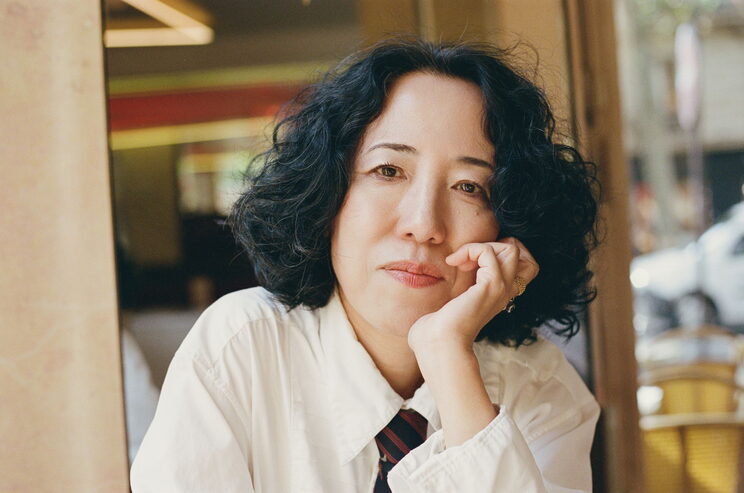
In your recent interviews, you have mentioned your new book about Venice. The Russian translation hasn’t come out yet, so could you give your readers some idea of what it’s about?
This is a novel about a Venetian woman from the early nineteenth century who kept a herbarium. The narrator, who stumbles upon it by chance, follows in her footsteps in search of the trees and herbs she must surely have seen. Accompanied by this ideal guide, who also becomes her soulmate, she discovers the plant world of the City. It also explores the blurred boundary between fiction and reality, how to let dreams flow into our lives, and how to write a book in which no one dies.
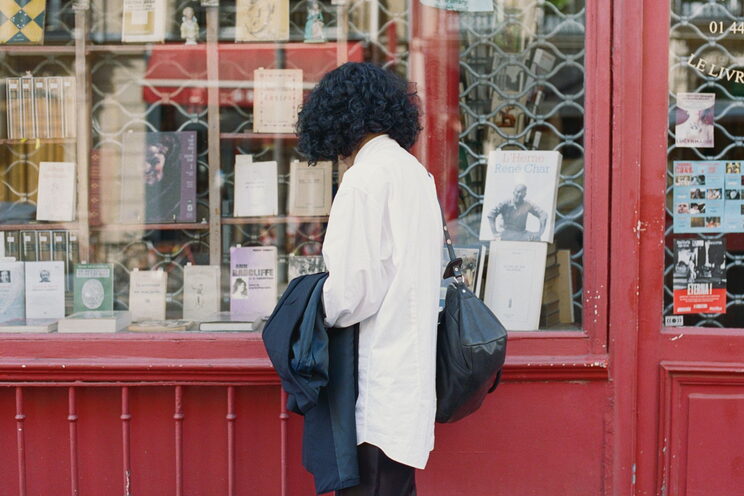
The title of your novel Venise, millefleurs itself conjures up the image of the city as a garden. Do you perceive a connection between cultivating plants and fostering culture?
Mille-fleurs — French for “thousand flowers”, referring to a specific type of tapestry in which a solid-coloured background is sprinkled with numerous depictions of flowers.
Absolutely! And it’s not just about ‘bringing culture to life’ — the very act of writing a book is already like tending a plant: you sow seeds without knowing whether they’ll grow; you have to nurture them, look after them, be patient, plan ahead, adapt to the weather and keep hope alive. I think we should learn the art of tending a plant in everything we do for the future: giving time to others, looking after them, trusting them, being patient, hoping, dreaming. And being with others — just as a gardener cannot work alone, but always works alongside earthworms or bees — knowing how to rejoice with them.
In your books, there are many reflections on time. When did you first become conscious of time as something you could write about?
To tell the truth, I think that ever since I was very young, time has been one of my main interests; it fascinates me greatly. Of course, time is a mystery to all children, but the feeling of nagori was already very strong within me when I was little. I didn’t want a book to end. And I’m still interested in artists for whom time is a central theme, such as On Kawara or Christian Boltanski, as well as in Baroque art’s preoccupation with temporality.
Furthermore, I believe that literature is one of the few tools that allow us to play with our own sense of time, with our own fate. I am therefore well aware that time is a subject one can write about rather than simply endure. But I would also like, through literature and my own writing, for readers to ‘experience’ a sense of time that differs from that of reality — an experience possible only in fiction (and that is, in a way, the theme of Venice, Millefleurs).
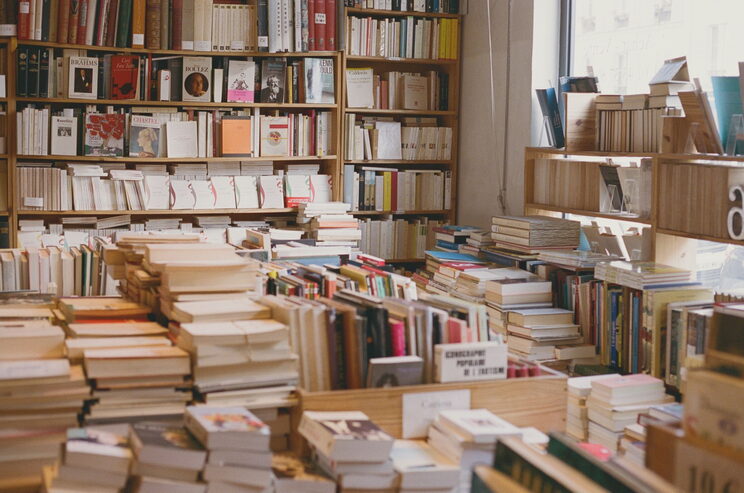
In one of your interviews, you said that Venetians live in trees, like the hero of Calvino’s novel The Baron in the Trees. Interestingly, that is one of the favourite books of architect Renzo Piano, the author behind the reconstruction of the House of Culture GES-2 . According to him, light is the main building material in his architecture. Could you tell us what place light occupies in your books?
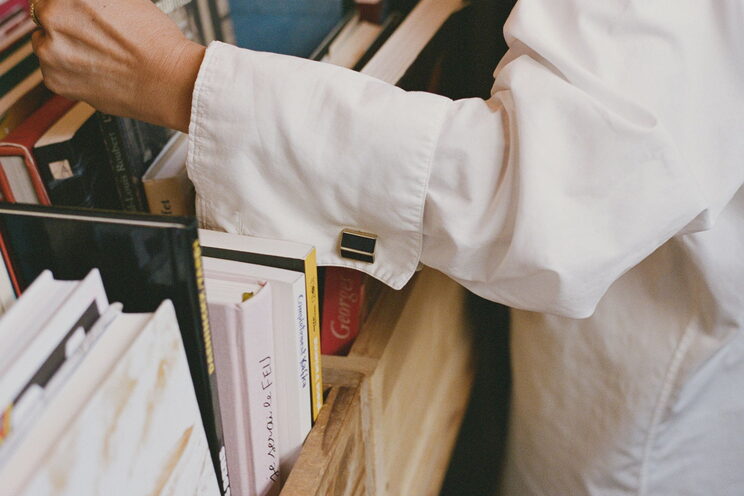
Oh, what a coincidence! I didn’t know that was one of Renzo Piano’s favourite books. I understand the idea of natural phenomena being part of architecture. What interests me perhaps most of all is shadow (which cannot exist without light — we’re talking about the same thing at the end of the day). Moreover, I’ve translated Jun’ichirō Tanizaki’s In Praise of Shadows into French. A shadow is like proof of our existence, or rather of our presence. Shadows also interest me because they are proof of a relationship: they always fall on something other than ourselves (whether it’s the shadow of a tree upon us, or the shadow of a vase on the table). On a cloudy day, it is the shadow of the wispy clouds that falls upon us and darkens the sky. Shadows quietly create this fleeting connection, in silence. We rarely pay them any attention, even though they are both essential (not to mention the benefits they bring us in the age of climate change, such as the shade provided by trees in cities) and yet always remain mysterious.
You devoted one of your books to Venice, and another to Beirut. What other cities have you drawn on for new thoughts and ideas?
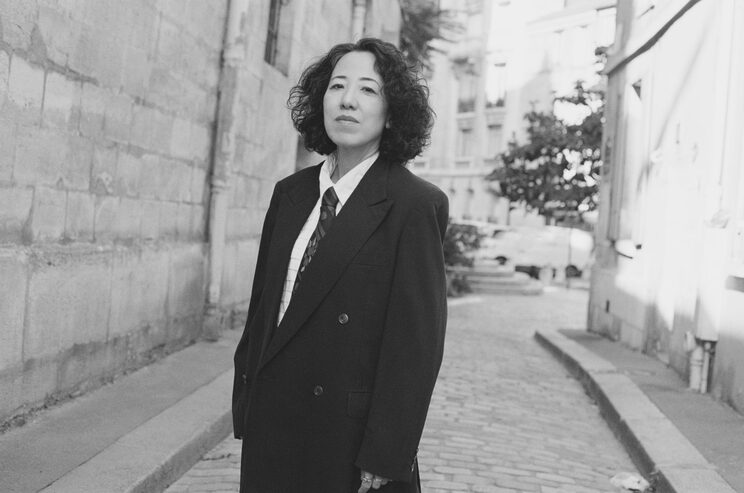
I think, without a doubt, that it is cities at the crossroads of several cultures that interest me. This is true of both Beirut and Venice. Similarly, Granada in Spain, where I spent ten summers, has been one of my sources of inspiration, precisely because at the heart of the city lies a trace of another civilisation: the Alhambra, which dates from the era of Al-Andalus. A city situated at the meeting point of several civilisations can also be fragile, as this ‘contact’ does not always occur without violence. But it is precisely in this fragility that it can find a balance, a harmony between peoples. Other cities, such as Istanbul, Taipei, Buenos Aires and Saint Petersburg, inspire me in this regard.
In your books, you often refer to rare words from different cultures. What unusual words have you collected during your travels?
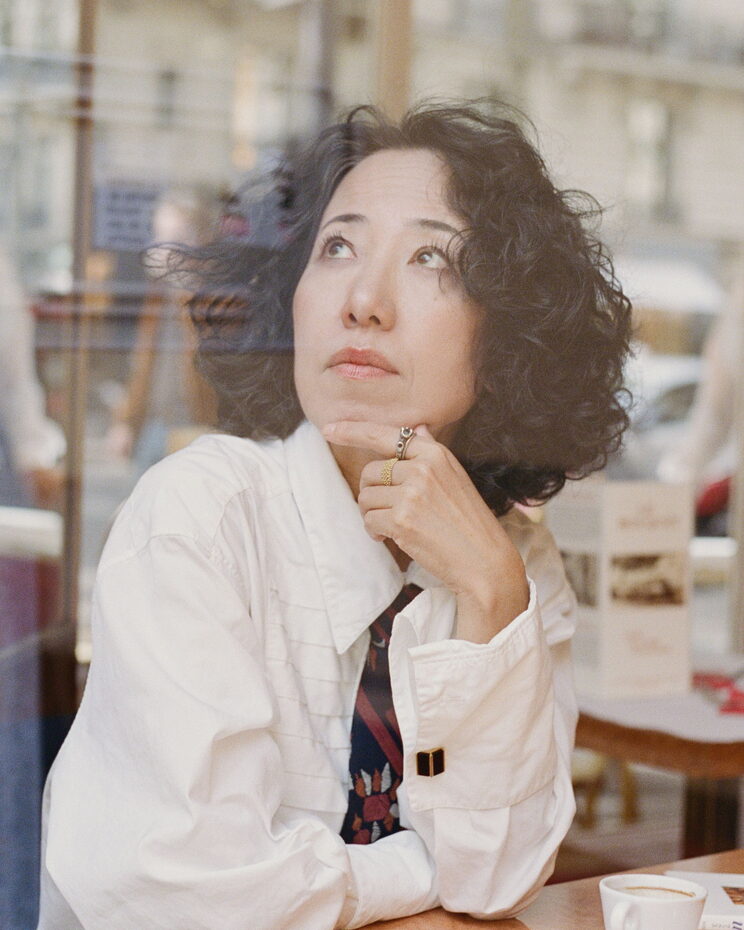
It wasn’t whilst travelling, but more recently, that I found myself thinking about the Italian word lontananza. This word refers to geographical or relational distance, but also conveys a sense of nostalgia, a sadness arising from being far away or separated from a place or a person one cherishes. It can be a simple acknowledgement of distance, but a sense of attachment can also be involved. In French, éloignement means almost the opposite, as it is often intentional. It is when one wishes to ‘create some distance’ from a person or a group of people that éloignement comes into play. In Japanese, there is a word: sabishii. It is that feeling of slight sadness caused by the absence of a person or the end of something. But sometimes, one can feel sabishii without any specific cause: a vague sense of mild sadness that comes over you for no reason at all, though it is not as profound as melancholy. To tell the truth, as a translator, I reflect on some such word every single day. Each word encompasses a whole world, and you only have to scratch the surface a little, to pay close attention, to see a world full of nuances unfold.
Lontananza — an Italian word denoting geographical or emotional distance. It conveys a sense of wistful sadness that arises when one is far away from a place or a person one holds dear.
Éloignement — a French term, signifying an intentional distancing — a physical or emotional withdrawal from a person, a group of people or a particular situation.
Sabishii (Japanese 寂しい) — a concept that captures a sense of mild, quiet sadness — a melancholy propted by realisation of the fleeting nature of beautiful things. Sabishii may arise when something comes to an end, such as a journey, a particular phase in one’s life, or a beautiful moment.
If food is a way of perceiving reality, then what food brings back memories of this summer for you?
I’d like to tell you about a fisherman from the island of Salina from whom I used to buy fish every morning. It wasn’t me who decided this; it was he who decided what we should buy, and how much. One day, he handed me a one-kilo bag of prawns that were almost still alive, saying, ‘Here, today you’re buying these.’ And when I went into the café where I used to go every morning after a swim, a local said to me, laughing, ‘Oh, I’ll be popping round to your place tonight for some prawns! ’ Everyone knew I’d bought the prawns from Giancarlo (that was the fisherman’s first name).
For ten days, I carried on eating the fish that Giancarlo caught in the sea around Salina. It’s the best way to become one with a place: you breathe the island’s air, eat the island’s fish and capers, and drink the island’s wine, made from grapes caressed by the island’s wind.
Could you tell us about the textures, smells, sounds and tastes that made up your childhood?
I remember very clearly that exact moment when, during a PE lesson (I was terrible at it), I felt the breeze caressing my cheeks (I was standing there, in a daze, instead of doing the exercises) and I thought to myself: I’d like to write about this sensation; I’d like to make it the focus of my book.
Or again, when I was in sixth form, I’d spend ages gazing at the dust particles glinting in the sunlight and I’d think to myself: where is all this dust going? Won’t it bury the world, and eventually bury us too? What if you wrote a book solely to describe the movement of this dust (you can tell I used to daydream a lot at school)? In the end, I always end up writing about the same thing…
What books did you read in your childhood? Do you have any talisman books?
I used to read a lot of Western children’s literature, but mostly the ‘old-school’ sort: Mary Poppins (which I read before seeing the film), Paddington, Doctor Dolittle, Little House on the Prairie… But also One Thousand and One Nights. I wasn’t necessarily drawn to Japanese children’s literature because, to be precise, when I was little, I wanted to sense ‘the scent of the Other’ in books. The sentences and syntax revealed the languages lying behind them, and I’d come across expressions that were rarely used in Japanese. This was no doubt down to the translators’ clumsiness, but that’s how I came to discover other cultures: through their languages, via translations. So I don’t think a translation that isn’t quite polished is a bad thing for children.
Apart from these, my favourite books as a child were those by Léopold Chauveau. He was an author from the early twentieth century; he served as a military doctor during the First World War and drew and then wrote stories for his son, who died very young. It’s a sort of tribute to his beloved son, and through the endearing monsters he drew, I think I can also see the wounded and maimed soldiers from the war whom he cared for. The stories always begin with his son’s request: ‘Papa, tell me a story’, and the father tells him one. You can sense a deep bond between them; sometimes, the son teases him gently: ‘Papa, your story’s rubbish’ or ‘Tell me a story that starts at the end and ends at the beginning’ — it’s almost like Oulipo! A few years ago, the family of his heirs donated the collection to the Musée d’Orsay, which dedicated an exhibition to him.
Oulipo (abbreviated from Ouvroir de littérature potentielle — “workshop of potential literature”) — a French association of writers and mathematicians who sought to explore the possibilities of language through formal literary experiments.
You have said that smells help you become aware of the reality of existence. Is there a particular smell that has made you suddenly feel more awake to your own existence recently?
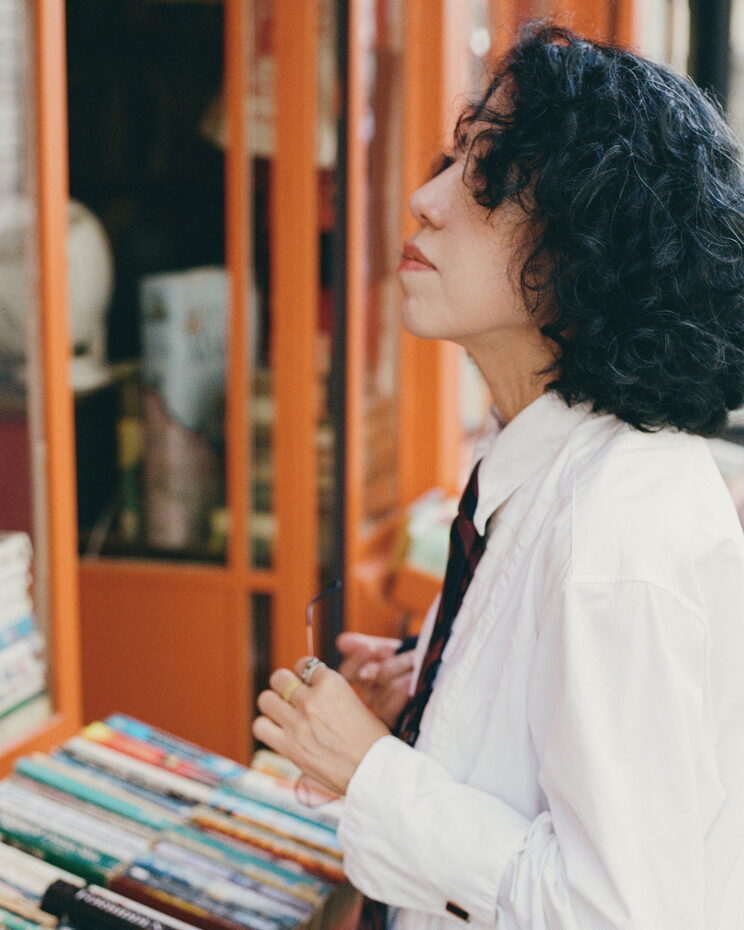
It may not concern my own existence exactly, but last week a Lebanese actor asked me what had made the biggest impression on me amongst the smells of Beirut. Unable to answer him straight away, I tried to recall the smell of the Corniche, which I had breathed in during my first stay, and then again during my second. And flashbacks of scenes I’d completely forgotten came flooding back… Proust’s madeleine is well known: we can, of course, remember something through a specific smell, but the very act of ‘remembering a smell’ — that smell which, at that very moment, does not exist — can also trigger a memory and bring back the past.
In your book It Is Not Random. A Japanese Chronicle you gather materials for an archive of the 2011 catastrophe. Why is it essential to document grief?
I do not know whether it is essential or important to commit to memory every aspect of the grieving process. There are times when forgetting saves us, particularly in the face of disasters that strike individuals. But this book was written primarily to serve as an archive. Because a disaster caused in part by human action (in this case, the nuclear power station accident) must not be forgotten.
Furthermore, when a tragedy strikes — be it a war, a natural disaster or a pandemic — learning about other cases and how other people reacted to similar disasters can help us understand how to respond, reflect on the causes and overcome the difficulties. This is also why, when someone dies, we look for a book on the subject. This book will be of use to those who, unfortunately, have experienced such tragedies.
Do you think the experience of being present differs across cultures? Are there different cultural ways of sensing what it means to be ‘here’?
Being present is the state that is most difficult to describe, and also to analyse. I have, up to now, reflected and written a great deal about the past, and somewhat less about the future (though notably in Ce n’est pas un hasard, that moment when the unforeseen suddenly becomes part of the present, and, no sooner has it been experienced, takes its place in the past). But the present is a major question — whatever the culture — to which I cannot find an answer. I do not know whether the present exists, except through ‘apparition’, which is, amongst other things, undoubtedly the very definition of poetry.
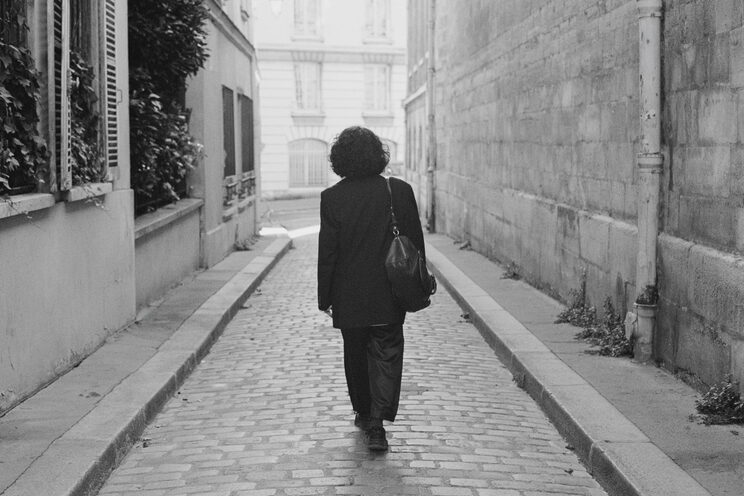
Photo: Luba Kozorezova
Could you tell us what you’re working on now?
At the moment, I’m keeping a diary of what I’ve been listening to almost every day: this might give you some clues to help guess the possible theme of my next book…