T
/

Institutionalize this.
How big business and institutions cooperate to change culture
What is it in recent years that has led brands to increasingly invest in museums? What kinds of partnerships have had an immediate effect, and which have been more long-term in their impact? Here, we shall consider several examples of this phenomenon: from putting Van Gogh on a tee-shirt to planning a performance art program at London’s Tate Gallery.
Author
Marina Antsiperova


Official partner of the
While far from a recent invention, institutional support from large companies has undoubtedly experienced a significant boom in recent years: targeted collaborations are becoming an ever more familiar approach, and long-term partnerships are increasingly common. The last few years have even seen many brands deciding to found their own institutions, in which they now support all manner of exhibition programs, research, and residencies. Examples include the iconic Fondazione Prada in Milan, the recently opened Fondation Cartier pour l’art contemporain in Paris, the already venerable Fondation Louis Vuitton, the striking By Art Matters building supported by JNBY in Hangzhou, and the cultural spaces found within Hermès boutiques in cities across the planet.
What do brands and institutions have to offer one another? First and foremost, this involves the sharing of audiences and reputations, as well as mutual support in a more practical sense: financial — in terms of exhibitions and public programs, the acquisition and restoration of exhibits; and conceptual — for the launching of new products.

The most common example of such collaborations is the targeted use of artworks in a brand’s products. To give an example, many brands, including the more well-known Vans and the somewhat more niche Daily Paper, have launched collaborations with the Van Gogh Museum in Amsterdam. Not every such partnership, or relationship, is exclusive, however. Following their successful collaboration with the Van Gogh Museum, Vans brought out a joint collection with MoMA, an institution which also collaborates closely with Uniqlo.
Collaborations of this kind are not limited to clothing manufacturers. The Belgian brewery Duvel, a long-standing partner of various European museums and biennials, released a special design of beer packaging featuring the works of René Magritte to commemorate the painter’s 125th anniversary. Swatch is yet another active participant in the Venice Biennale’s parallel program, having developed a line of watches in collaboration with Amsterdam’s Rijksmuseum, while Estée Lauder and New York’s Neue Galerie came up with a special lipstick color, “Berlin Red,” to mark an exhibition of the German artist Otto Dix.
Brands regularly integrate into the cultural programs of major events if the general tenor is found to resonate with their values: Bottega Veneta, for example, has supported and continues to support performances and exhibitions on its home turf, at the Venice Biennale. Gucci’s former creative director Alessandro Michele’s love of classical art led the brand to partner with the Uffizi Gallery in Florence, including sponsoring exhibitions and holding a show at their venue.
The most interesting and least quantifiable form of interaction is the cultural synergy that takes place at the intersection of art, design, and commerce. According to Jürgen Habermas, the museum is recognized as a space where humanity goes to get to know itself through exhibitions and the conversations that follow. Long-term partnerships between brands and institutions can therefore embrace this ambition and set it among their goals.

The MoMA and Uniqlo partnership is considered exemplary in the institutional community: the Japanese clothing giant’s long-term support of what is arguably the world’s premier art center aims to open MoMA to as many people as possible. This manifests itself in free-entry days and extended evening opening hours, as well as online projects and discussions that enable people from anywhere in the world to learn about MoMA events. This likewise applies to joint productions: 80 artists from the museum’s collection have already found their place on Uniqlo wares.
The BMW Tate Live program provides a further classic example of a long-term partnership that has helped shape the entire direction of an institution: from 2012 to 2020, BMW supported exhibitions and performances at London’s Tate Modern focusing on the intersection of art and technology, emphasizing the firm’s interest in innovation and creativity. This program has featured 40 artists, with one of its online broadcasts having earned a Webby Award.
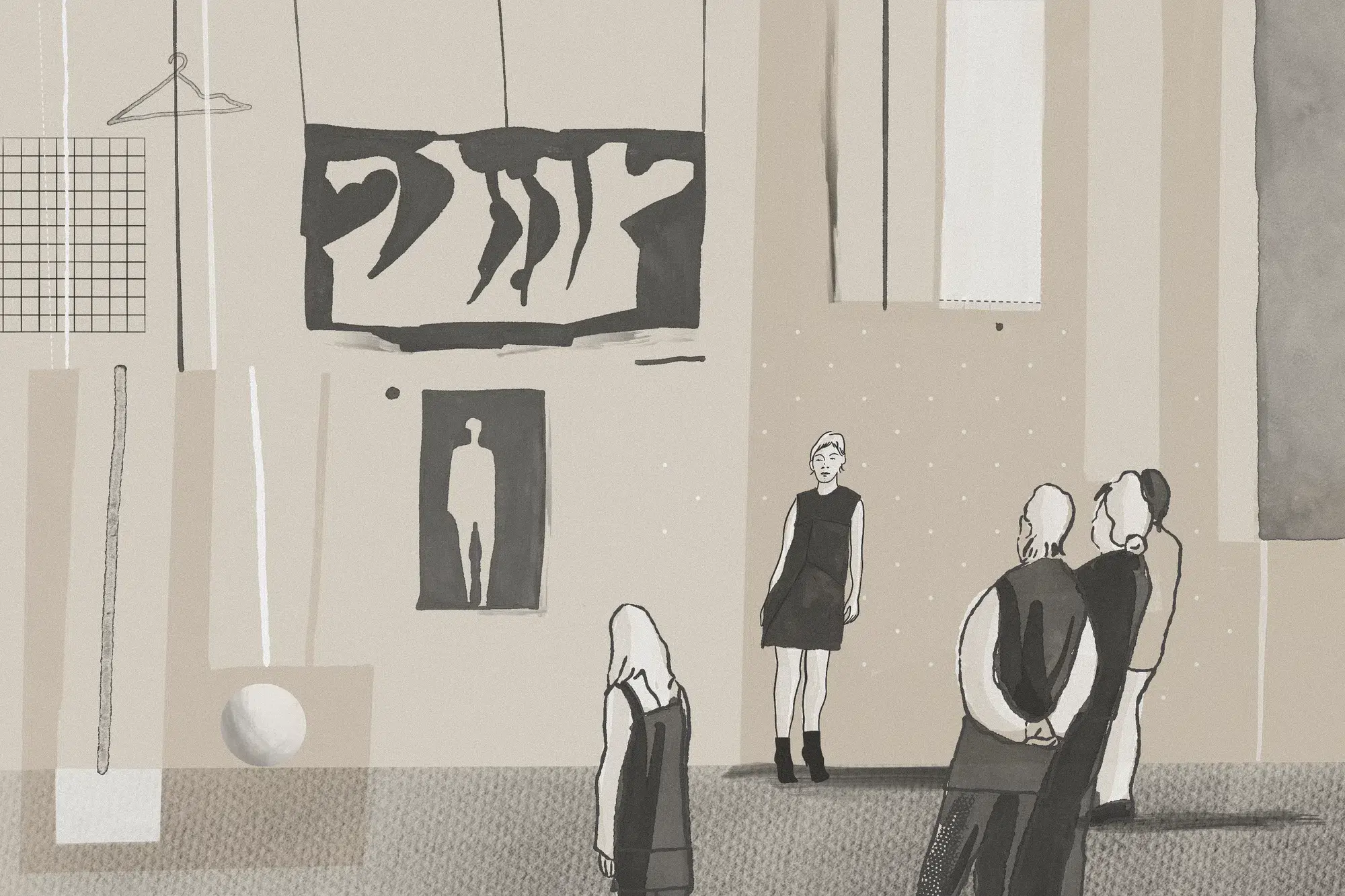
Illustrations: Ksenya Annenko
The partnership between LIMÉ and the
Mediation is a form of interaction between a cultural institution and its visitors. It is based on the core principles of participation and respectful dialogue among all participants, regardless of their varying levels of experience, views, or age.
Yekaterina Yermolenko, director of international liaisons and sponsorship projects at the