{"points":[{"id":1,"properties":{"x":0,"y":0,"z":0,"opacity":1,"scaleX":1,"scaleY":1,"rotationX":0,"rotationY":0,"rotationZ":0}},{"id":3,"properties":{"x":0,"y":0,"z":0,"opacity":0.4,"scaleX":1,"scaleY":1,"rotationX":0,"rotationY":0,"rotationZ":0}}],"steps":[{"id":2,"properties":{"duration":0.1,"delay":0,"bezier":[],"ease":"Power0.easeNone","automatic_duration":true}}],"transform_origin":{"x":0.5,"y":0.5}}
T

Talks about emptiness. Sumakshi Singh on breath song and the mapping of illusion
In this interview, we spoke about history, memory, space for breathing, and the invisible connections between people.
Author
Marina Antsiperova
Sumakshi Singh has taken part in over a hundred exhibitions around the world, including Saatchi at their London space and MAXXI in Rome, designed window displays for Hermès, and got a special mention at the Loewe Craft Prize. Like flowers growing out of cracks in a wall, her works — sometimes large-scale embroidered compositions, sometimes miniature pieces — tell stories about things that have become difficult to see with the naked eye today. This year, Sumakshi Singh will represent India at the Venice Biennale.
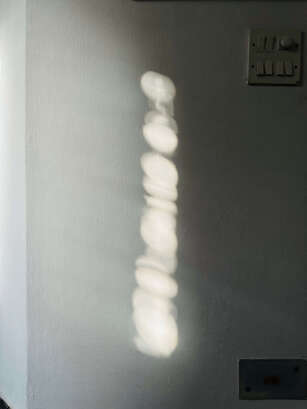
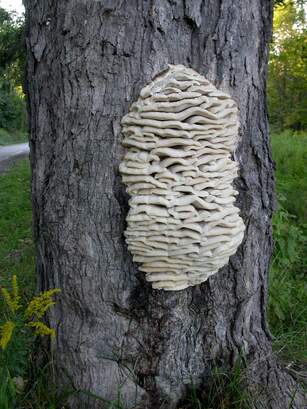
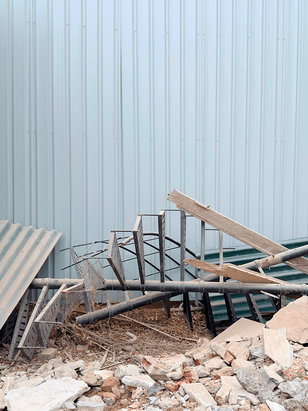
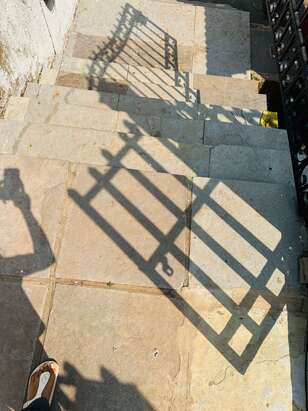
Light and shadow, reflections and other “quiet moments” in which the artist finds the inspiration for her works.
Does it seem to you that contemporary culture pays too much attention to the physical world? And have we lost the ability to see invisible things — memory, history, the interconnectedness of everything with everything?
The short answer is yes. But maybe first I’ll just start with a little bit of history. The installation work that I was doing about twenty-two years ago when I’d just got out of graduate school was always influenced by space — but it was mostly about “place” — the history or the physicality of the site. I would do research about the people that had lived or worked there, what had happened on the site earlier — personal stories, cultural histories, physical changes — and then the narrative would unfold about that place. So, if I was doing a project in Biella, then the project would have to do with the textile history of Biella, using materials I salvaged from those abandoned textile mills and creating images, animations and installations (with the closest thread I could find to one used in these mills) of the images of the textile factory in 1920 compared to now...etc.
But as time passed, I started to think much more about the space between things, the space within things and the kind of inner spaces that we occupy. Spaces of imagination, spaces of memory, spaces of feeling, energetic spaces, things like that; Meditative spaces, the space occupied by breath. I did a project on the breath as well, actually — Breath Song.
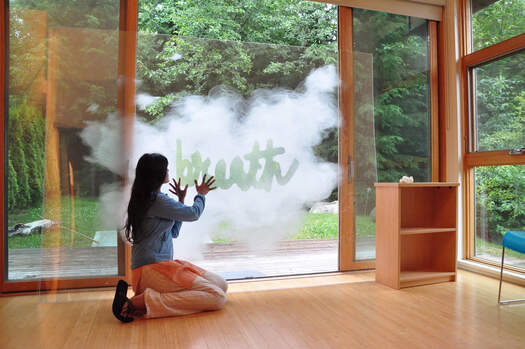
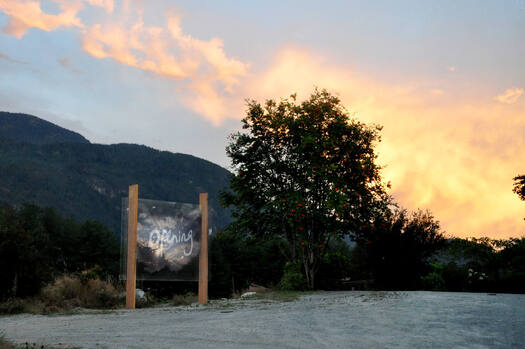
I recorded the breath cycles of 108 people in Squamish, Canada, and layered them together to create what I call a “breath symphony”. While they were focusing on their breathing, I also asked each participant to write down the words that surfaced for them. Then I shaped those words into a collective poem to accompany the symphony. The poem — made of images and their handwritten notes — was projected onto an ephemeral, cloud-like form I built from sanded acrylic sheets by the river. The projection looked almost like a finger tracing words onto the fog of a window pane, created by the condensed vapours of our collective breath.
Do you remember when you first felt the desire to work with emptiness?
Breath Song (2014) is a combination of 108 breath sounds recorded in Canada and the projection of traces formed by breath on glass.
We were taken to visit the Ajanta and Ellora caves while we were still in college in 2000. I saw how time had eroded these beautiful murals from the 2nd to 5th c — leaving behind these large gaps in the imagery. I started thinking about how rich these transitional voids were — my mind would keep creating new ways to fill it to connect the fragmented narratives that remained. Then I moved to Chicago in 2001. I had come from India where it was very common to see trees growing out of the sides of buildings and there’s this real mix between the man-made and the natural. And then I moved to downtown Chicago which is super-manicured- all the plants are in boxes, all the trees are the same height, flowers are planted and removed in full bloom (you never see them grow or die). It was very strange to me to see this kind of dialogue which was all about human control over nature, and where nature was seen as a sort of consumable commodity for human beings. I wanted to make work that would somehow pervert the sterility of all these surfaces and look like little weeds in the cracks, or fungus or mushrooms, or something that could grow without human permission.
The Ellora and Ajanta Caves — ancient temple complexes carved into rock, renowned for their frescoes and sculptures.
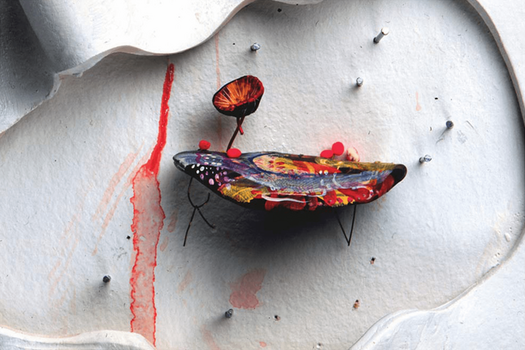
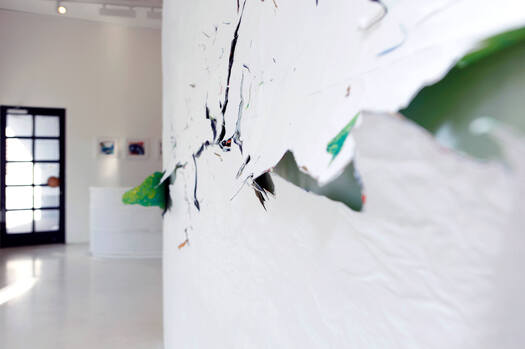
Left: Micro-interventions embedded in wall and floor from Kashya Hildebrand Gallery, Zurich, 2008
Right: Musée d’art contemporain (MAC), Lyon, 2011
I started creating mico-interventions in the walls and the floors and the ceiling. When you walked into a room it pretty much looked like an empty space, or like there’s a bit of scarring in the space. As you got closer you started to discover these tiny worlds. But they weren’t just contained pockets of activity. As you stepped back from one work, you would see a living plant and tiny sculpture right next to it. As you continued to pay attention to the walls, you’d start to notice real and artificially created cracks, marks, scars, lumps, an insect wing floating on a cob-web. The architecture turned into these saturated membranes and it became impossible to say where a piece began or ended — they all proliferated into each other’s territories and so the transitional voids between “artworks” disappeared. The architecture which is normally invisible became present, and people would spend so much time looking in such detail at every little mark on the wall (even those I hadn’t created), that it became very hard for them to switch that off when they left the gallery and they would call me telling me how they were noticing all these details in their own home, or daily route that they hadn’t noticed before.
When creating interactive installations, do you consider the viewer a co-author of your projects? Are you interested in the emotions the viewer experiences?
I absolutely think that. It happens differently for every body of work and differently for each viewer. At the end of the day, it is really the viewer’s own mind and their own boundaries that allow permission for something to be part of the art experience or not. In the micro-interventions work — it’s as though either everything in this space becomes art or nothing does. And then, if everything in this space is art including that crack, then what happens to the crack that’s just outside the gallery, and what happens to the one in your house? And so the viewer definitely, through their own permission, is co-creating what they’re allowing or not allowing to be part of the art viewing experience.
And then there are other bodies of work where I’ve mapped illusions in spaces. The viewers are walking through these anamorphic drawings I have created on the architecture and furniture -and their direct experience of the space is actually quite fractured and broken and disconcerting. But at the same time, they’re seeing themselves on a large screen where they are moving through the lined-up illusion of the drawn space that obliterates the physical. They are inhabiting two spaces at once, trying to understand how a gesture or action in this space will register as in the other.
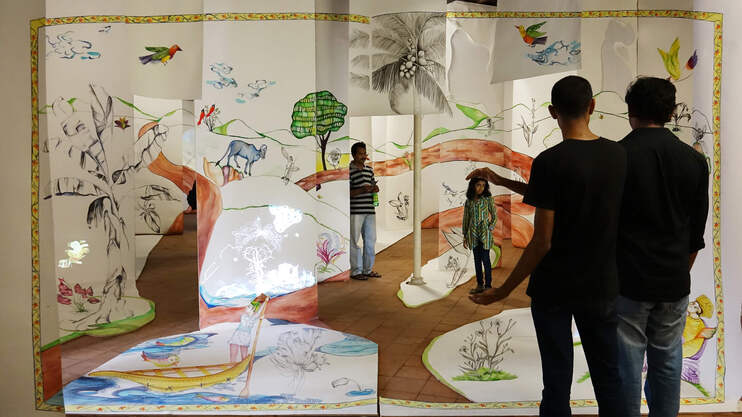
In Between the Pages, Kochi Biennale, Kerala, 2014
It’s interesting that in your interviews, when talking about the projections you worked on extensively in 2006, you mention your late grandfather. And at the beginning of your work with embroidery — the letters from your mother too, which you began to embroider after she passed away. Do you address your art to those who are no longer with us?
Yes, so, I don’t know if I consciously address the work to them, but sometimes I feel like the work is coming from them. I can feel their presence inside me and that is prompting me to digest my relationship with that part of me that is feeling a sense of loss or grief in regard to that particular person. I mean even the embroidery and the thread. It’s not a medium that I’d used much before but it came back because, again, it was a connection to my mother.
When I go to the studio, many times I don’t go with a conscious idea of what I’m going to create or why. There’s just this sort of feeling — a bit of dissonance, or a sense of grief, or I feel a bit raw and I can’t even name what the feeling is. But then I go into the studio and there will be an impulse to pick up some material, and now I just follow that impulse because I’ve learned to trust this voice. As soon as I pick it up and start working with it, suddenly it starts to become clear what I am really digesting and why it is happening.
Materials tell the story as well. Like when I re-created the illusion of my grandfather’s living room in 2008. After he died, this space which had once felt so familiar, seemed to turn foreign. Even though I knew what all these objects were (that he had collected and told us stories about), I could no longer perceive them the same way. That fixed idea of his room was changing. There was a gap between my knowledge and my perception of the space. I wanted to visually create this gap- to digest what was happening. I’ve done many different versions of illusion mappings, but that one, I wanted to make in chalk powder pastel; as people walk through it, I wanted it to get erased and disappear like a mandala — so I could say goodbye to that fixed memory of the space. I collected the coloured dust and I still have the dust lying here in a bowl. I was living abroad when he passed away so I didn’t get to go to his cremation, I didn’t get my closure about that space and about him, so in a way the dust of the installation is like ashes or the remnants of that memory, in a way. It was called Mapping the Memory Mandala. So, yeah, so all these things help to digest.
Your projects often turn to the history of place and the history of your family. I wanted to ask: Which one of them was the most personal for you — was it the reconstruction of your grandfather’s house?
There are 2. The first was mapping the illusion of my grandfather’s living room. Because that was really the first time that I took on such a directly personal topic and I felt quite exposed and naked to be working with my family home. I make art because I feel it helps me process and transform, and I learned so many things about myself in doing that project because it was so extremely labour-intensive. The camera is looking through a drawing of the room which is made on glass. Meanwhile, I’m running around in a three-dimensional space trying to recreate a two-dimensional image that will only work from that particular camera’s point of view.
It doesn’t even correlate to my physical reality, where I am standing in space right now. This project showed me so much about where one gets attached to an idea of something and then tries to recreate reality according to that idea but forgets to see where they actually stand now. It’s also about wanting to control and hold together a thing that simply cannot be held together. And that illusion is so fragile that if the head moves just one inch from this, it breaks, so it can only exist in that one place. It was a very interesting project for me because it taught me a lot about myself and the insights from it were also very personal, I would say.
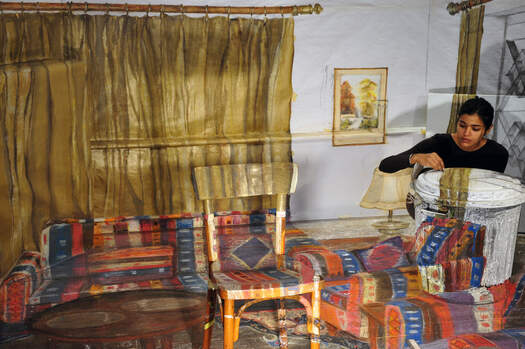
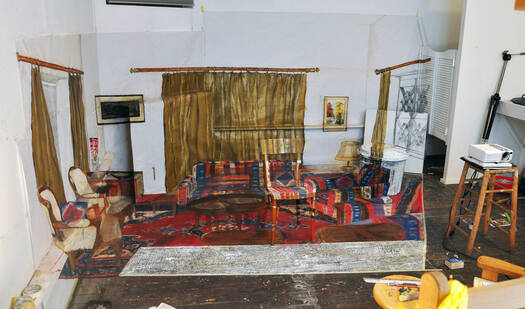
Process: Mapping the Memory Mandala, Camargo Foundation, France, 2008
33 Link Road was the other very personal project. It was shown at the Kiran Nadar Museum of Art and was about the loss of my family home. After my grandparents passed away — the house was abandoned and this home that had once felt so permanent, so solid started to feel less solid — a memory that had lost its substance. My most common memory of the home is sitting in the garden embroidering and knitting with my grandmother — so I wanted to use thread. I recreated the architectural facades of this home in exact life size detail in thread.
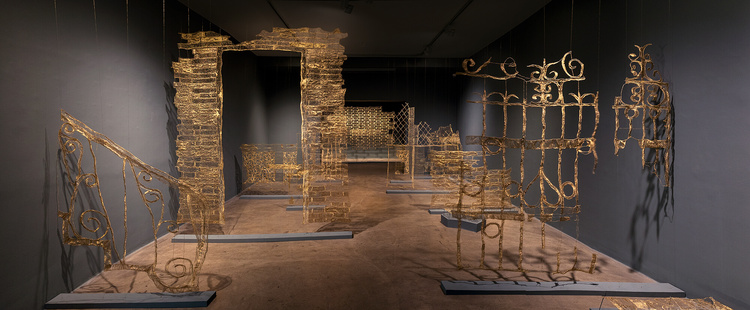
33 Link Road, Vadehra Art Gallery, Delhi, 2024
And which one was the most large-scale?
Maybe the largest installation I did was in Kochi, in Kerala. And that was a room about seventy foot long and thirty-five feet wide, filled with hanging scrolls of paper. Each scroll had projected stop-motion animations that interacted with fragments of painted imagery relating to Kerala’s history — the plant varieties from the Malabar region taken from a 17th C Dutch encyclopedia called the Hortus Malabaricus, animations referring to the trade of pepper and the arrival Of Vasco da Gamma into Kerala in 1498 and a 4th C text called the Surya Siddhanta that revealed very sophisticated mathematics. Viewers would walk through this labyrinth of fragmented histories, come to the front of the room where they would see themselves in a “book” (which was actually a screen) — and this book showed the all these fractured images lining up to create the illusion of an open manuscript book of Kerala’s histories and they would see themselves as characters moving through this book.
You’ve had the chance to work all over the world – does your art change depending on the place where you find yourself? Do you change as well?
It really depends on how much time you spend there. When I’m going just to install a show and come back, it happens less often. But I lived in Chicago for about seven years... I’ve spent a lot of time in Italy, maybe six months at a time, a good amount of time in France...and these places marinated into me. And even in India, I didn’t grow up in one place. I grew up in eleven different cities and learned many different languages. And the culture here is also very diverse from state to state to state. For me it’s quite important to sometimes shift out of where I live because this does offer new vantage points and new insights. Moving to Chicago taught me about myself — my resistance to immediate gratification, my values vis a vis natural rhythms versus man-made ones. Each place exposes one to new value systems, new aesthetics, different relationships- to time, to work, to rest, to beauty, to logic, to history, to spirituality. I grew up in India then I went to Chicago, and when I came back I suddenly saw India in a completely different way. I started to explore the metaphysical dimension.
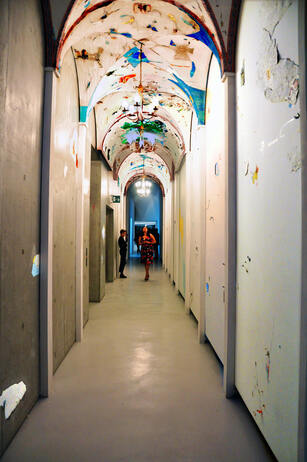
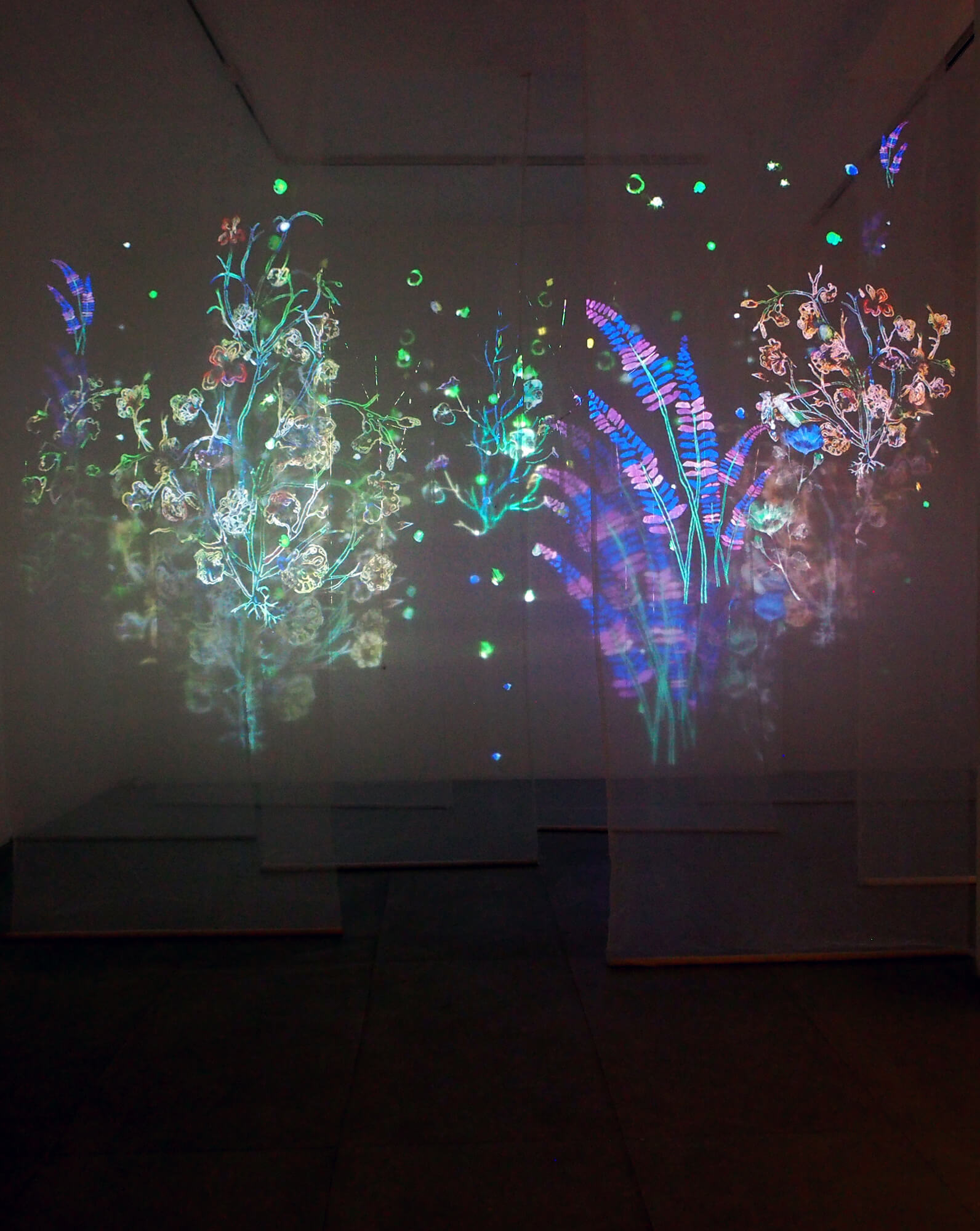
Left: MAXXI Museum Rome, 2011
Right: In the garden, exhibit 320, 2016
I’ve spent many years now meditating and doing yoga, and this has sometimes involved going to specific places- from caves in the Himalayas to simple ceramic tiled rooms- which have high vibration. They look like nothing special at all really, but if you close your eyes you suddenly feel that the energy goes up. And this entire thing, it relates to your first question about how you make the invisible visible — by having fresh eyes, to be able to see something without naming it and defining it.
We are overtrained to look at things. We forget to look in between things or behind things. And we’re very used to this habit of our mind that wants to just grasp an object and name it quickly, to define it and put it in a box. But looking again and again creates that fresh view. And sometimes travel helps us to come back and look again.
Are you good with routine?
I actually hate routine and I can’t keep to one with anything in my life except for my work. That’s because it doesn’t feel like a routine, the time I spend in my studio always feels new, and every time there I’m discovering something new. I have a system that works but also, since it’s always new, I can do it every day. I’m not very disciplined in many things in my life, but with my work I really am. So that’s the one thing that keeps me up.
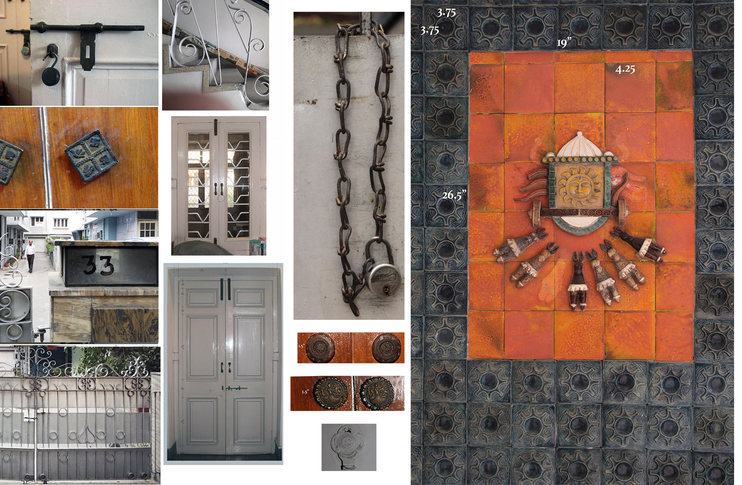
Sumakshi Singh’s family home.
All photographs – courtesy of the artist.
What is your favorite building and why?
33 Link Road in Delhi, which doesn’t exist anymore, which is our home. Architecture is obviously a placeholder for how you feel in space, but as somebody that has lived in so many different cities and countries, I think there was always that question of “where do I belong, what is home?” For everybody it’s a sense of intimacy, rootedness and connection – and for me this was always with that particular home. It was always a place where I knew no matter what I did and where I went I was always welcome and wanted and loved. So I think that this is definitely my favourite building for that reason.